
Project details
Service: overglazed extensions calculations
Client: Private residential homeowner / design & build contractor
Project: Rear single-storey kitchen extension with large glazed rear façade and rooflights
Location: Kingston Vale, London SW15
Regulation driver: Building Regulations Part O (overheating risk in domestic extensions)
ATSPACE team: Overheating assessment specialists, building compliance consultants
The headline result
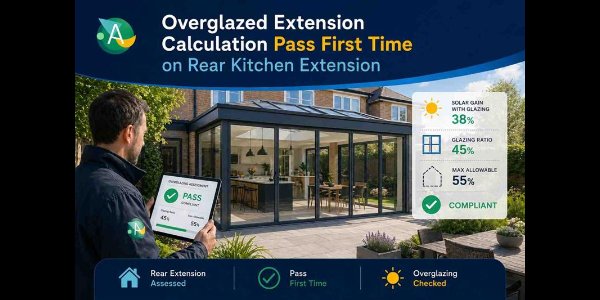
ATSPACE delivered overglazed extensions calculations that achieved first time compliance for a rear kitchen extension without any redesign delays.
The project featured a highly glazed extension with full-width sliding doors and multiple rooflights, creating a clear risk of overheating under Part O requirements. Through early assessment and practical guidance, ATSPACE confirmed compliance while preserving the original architectural design and avoiding programme disruption.
ATSPACE delivered:
Early-stage glazing risk review
Overglazed extensions calculations and assessment
Part O overheating compliance check
Practical ventilation and shading recommendations
Building Control-ready compliance report
No redesign or construction delay required
Project overview
This project involved a domestic rear kitchen extension to a detached residential property in South West London. The proposed design created a bright, open-plan kitchen and dining space with extensive glazing, including a full-width glazed rear elevation and multiple rooflights.
While the design achieved strong architectural and daylighting goals, the level of glazing introduced a significant risk of overheating during warmer months.
ATSPACE was appointed during the technical design stage to complete overglazed extensions calculations to confirm compliance with Part O of the Building Regulations. The assessment was required before submission to Building Control to ensure the design could proceed without delay or redesign.
The key challenge was balancing thermal comfort and compliance with the client’s design intent, without compromising the visual quality of the extension or introducing costly changes late in the process.
Why the service matters
Overglazed extensions calculations are used to assess whether a domestic extension contains too much glazing relative to its ability to control heat gain. This is especially important in modern kitchen extensions where large glass doors and rooflights are commonly used to maximise natural light.
These calculations are required under Part O of the Building Regulations, which aims to reduce overheating risk in residential buildings and ensure acceptable internal comfort levels during warm weather.
This service is typically required for:
Rear kitchen and dining extensions
Extensions with large sliding or bifold doors
Designs with multiple rooflights
Highly glazed contemporary home extensions
The calculations help ensure:
Solar gains are controlled effectively
Internal spaces remain comfortable in summer
Ventilation strategies are adequate
The design meets Building Regulations approval requirements
If overglazed extensions calculations are not completed early, projects can face compliance failures, redesign requirements, and delays in Building Control approval.
The problem
The proposed extension included a high proportion of glazing across both the rear elevation and roof structure. While this achieved strong daylight and aesthetic benefits, it significantly increased the risk of overheating.
Key issues included:
High glazing-to-floor area ratio across the extension
Multiple rooflights increasing solar exposure
Limited natural shading from surrounding structures
No initial overheating assessment completed
Unclear ventilation performance strategy
The project also required the design to remain unchanged, meaning any compliance solution had to work within the existing architectural concept.
Without overglazed extensions calculations, there was a risk that the proposal would fail Part O requirements, resulting in potential redesign or delays during Building Control approval.
What ATSPACE was asked to do
Carry out overglazed extensions calculations for the proposed design
Assess overheating risk under Part O requirements
Review glazing layout and thermal performance assumptions
Identify compliance risks early in the design stage
Provide practical mitigation advice where needed
Support Building Control submission requirements
Deliver a clear compliance report
Our approach
Step 1: Understanding the compliance requirement
ATSPACE confirmed that the project required overglazed extensions calculations under Part O due to the high level of glazing and potential overheating risk. The assessment approach was defined to align with Building Control expectations.
Step 2: Reviewing design information
We reviewed architectural drawings, glazing specifications, rooflight positions and internal layout arrangements. This allowed us to assess heat gain risk and identify areas of concern within the extension design.
Step 3: Practical overheating mitigation advice
Before completing final calculations, ATSPACE provided practical recommendations, including:
Optimising glazing specification to reduce solar gain
Reviewing rooflight distribution to balance heat exposure
Improving natural ventilation opportunities through opening design
Considering simple shading strategies where appropriate
These recommendations were designed to maintain the original design intent without requiring structural changes.
Step 4: Clear compliance reporting
ATSPACE completed the overglazed extensions calculations and issued a structured report confirming compliance with Part O requirements. The documentation was suitable for submission to Building Control and demonstrated that overheating risk had been appropriately managed.
Real issues we faced and how we solved them
Issue A: Excessive glazing across rear elevation
The extension design included a fully glazed rear façade.
How ATSPACE helped:
We assessed solar gain impact and recommended minor specification adjustments to bring performance within acceptable limits.
Issue B: Rooflight-driven heat gain risk
Multiple rooflights increased cumulative solar exposure.
How ATSPACE helped:
We refined the thermal assumptions and advised on placement optimisation to reduce overheating risk.
Issue C: Limited external shading
The property layout offered no meaningful external shading opportunities.
How ATSPACE helped:
We focused on ventilation performance and glazing specification to control overheating without altering design.
Issue D: Late-stage compliance requirement
The project required urgent assessment before Building Control submission.
How ATSPACE helped:
We prioritised rapid delivery of overglazed extensions calculations to avoid delays in approval.
Results
Overglazed extensions calculations passed first time
Part O compliance achieved without redesign
No delay to Building Control approval
Full compliance report issued and accepted
Overheating risk successfully controlled
Client retained original design intent
Programme maintained without disruption
What this project proves
This project demonstrates that overglazed extensions calculations are essential for ensuring compliance in modern domestic extensions with high levels of glazing.
When carried out early, they allow teams to:
Maintain architectural design intent
Avoid costly redesigns
Prevent Building Control delays
Ensure comfortable internal environments
Overglazed extensions calculations are not just a regulatory requirement but a practical design tool that supports better-performing residential spaces.
Mini FAQ
What are overglazed extensions calculations?
They are assessments used to determine whether a domestic extension has excessive glazing that could lead to overheating under Part O regulations.
When do I need overglazed extensions calculations?
They are typically required for kitchen or rear extensions with large areas of glazing or rooflights.
Do overglazed extensions always fail Part O?
No, compliance can often be achieved with correct design assumptions and minor specification adjustments.
Why is overheating a problem in extensions?
Large glazed areas can trap heat, especially in summer, leading to uncomfortable internal conditions.
Can I keep my design if calculations show risk?
In many cases yes, small adjustments to glazing or ventilation are enough to achieve compliance.
Who needs these calculations?
Homeowners, architects, designers and contractors working on glazed residential extensions.
Call to action
Need overglazed extensions calculations for your project?
ATSPACE supports homeowners, contractors and design teams in achieving clear Part O compliance for glazed extensions without redesign delays. Send your project details and we will confirm requirements and next steps
