Pass Your Building Control Inspection First Time With ATSPACE
Air Test for New Builds: Same-Day Part L Certification
All newly constructed residential properties require an air leakage test before building control sign-off. We deliver fast UK-wide site visits and guaranteed pass advice.
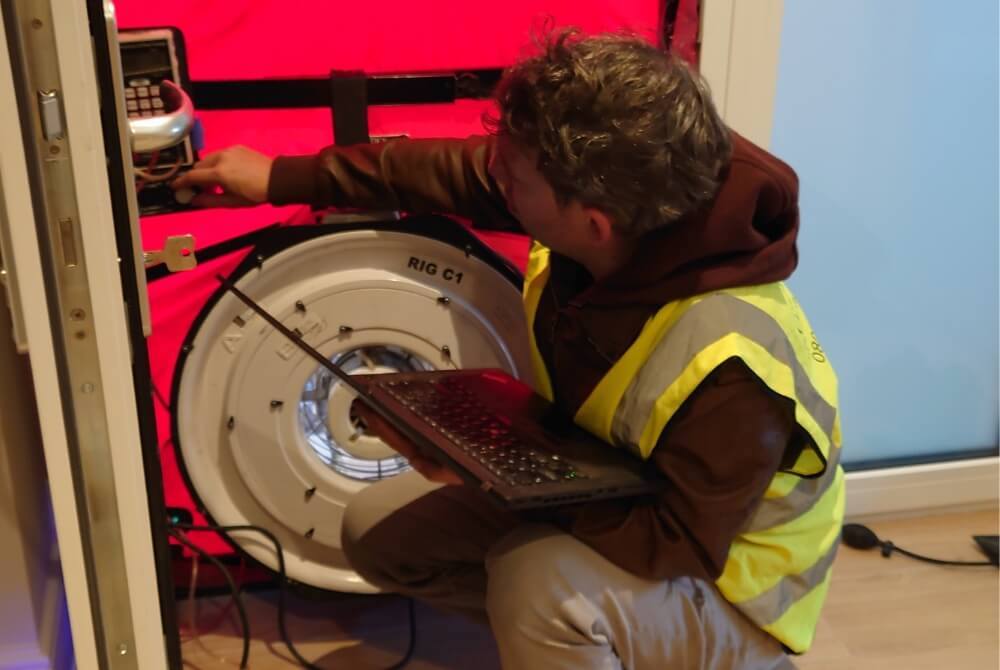
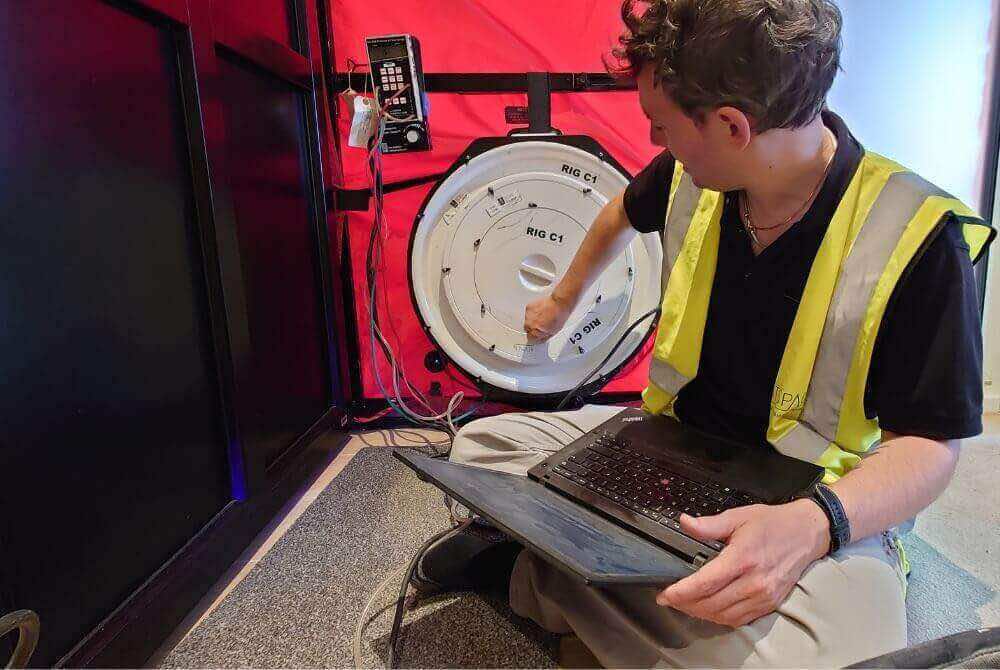
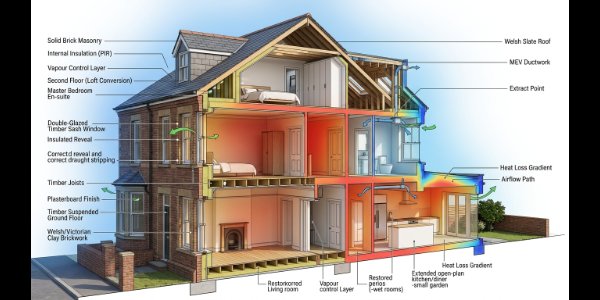
Residential air leakage testing is a pressure test that measures how much uncontrolled air escapes through the envelope of a dwelling. The result is reported as air permeability in m³/(h·m²) at 50Pa, which is the standard Part L measure used for new homes in England and Wales. In practical terms, it tells the builder, SAP assessor and Building Control whether the finished house or flat is as airtight as the design assumed, or whether hidden leakage is likely to cause compliance, comfort and energy-use problems.
Yes. Under the current dwelling guidance in both England and Wales, an air pressure test should be carried out on every new dwelling. That is the key shift many site teams still miss: the old sample-testing mindset is no longer the safe assumption for new homes. If you are building a house, bungalow or flat as a new dwelling, the working assumption should be that each one needs its own compliant residential air test result.
Yes, in current practice you should assume every plot needs its own test result. The guidance for new dwellings in both England and Wales says an air pressure test should be carried out on every dwelling, which means each house or flat needs to stand on its own result rather than relying on an old representative sample approach. For developers and site managers, that makes plot readiness and sequencing far more important than they used to be.
The key requirement is that the completed dwelling must meet the airtightness backstop and still comply with the SAP-based energy calculation using the measured result. In both England and Wales, the limiting air permeability for a new dwelling is 8.0 m³/(h·m²) at 50Pa, but the measured value must also not push the dwelling’s final energy metrics beyond the approved target values. In other words, passing the backstop alone is not always enough.
A good result is one that comfortably beats the plot’s SAP design target, not one that merely scrapes under the legal limit. The regulatory backstop is 8.0 m³/(h·m²) at 50Pa, but current reference specifications point much tighter than that, with England’s notional dwelling and Wales’s elemental specification both using 5.0. In practice, a “good” result gives enough margin to protect compliance and avoid last-minute ventilation or SAP headaches.
Not always. A dwelling can meet the 8.0 backstop and still fail the overall Part L compliance check if the measured result is worse than the design value used in the final SAP calculation and the finished energy metrics end up outside target. That is why experienced developers do not treat 8.0 as the real target. On most sites, it is a backstop, not a sensible aim.
Yes. The measured air permeability is used in the final compliance calculation for the dwelling, so the air test result directly affects whether the as-built home still meets its approved energy targets. That is why residential air testing and SAP cannot be treated as separate workstreams. If the tested result comes out worse than expected, the assessor has to rerun the final numbers and the plot can fall out of compliance.
For a straightforward new dwelling, published UK pricing suggests a typical residential air test is often marketed from around £95 to £200+VAT for a single plot, with much lower per-plot rates available on multi-unit sites. The final number depends on location, plot type, travel, urgency and whether retesting or diagnostics are needed. For developers, the cheapest quote is not always the cheapest outcome if it leads to rework or handover delay.
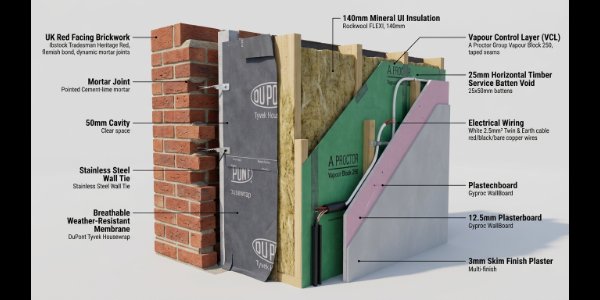
You pass a residential air test first time by treating airtightness as a design-and-build issue, not a mastic exercise at the end. Define the air barrier early, brief every trade that penetrates it, inspect dry-lining and service routes before they are covered up, and use an early pre-test or advisory visit if the target is tight. The plots that pass first time are usually the ones with controlled details, not the ones with the biggest panic on test day.
If a dwelling fails, the air permeability has to be improved and the home retested until it meets the relevant criteria. The guidance also says all pressure test results, including failures, should be reported to the building control body. In practical terms, that means extra sealing work, lost time, another test fee and potential delay to final SAP, EPC and handover. Failing is recoverable, but it is never programme-neutral.
Videos for air leakage testing
Explore our videos for quick, engaging insights on building compliance. From step-by-step guides to expert advice, our video library simplifies complex topics, making it easier for you to take action and stay informed. Perfect for when you need clarity in minutes!