On Site Advice to Hit a Good Air Tightness Test Result First Time
Need Air Leakage On-site Design Advice? We offer a fast, reliable, and nationwide service with unmatched expertise. Compliance and quality assurance made easy, hassle-free, and efficient.
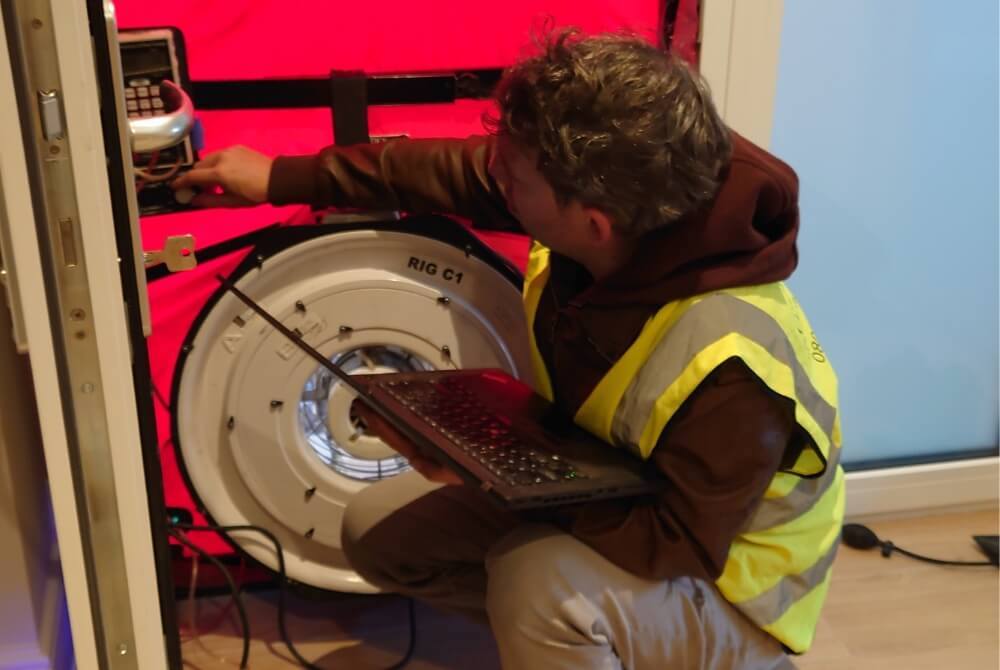
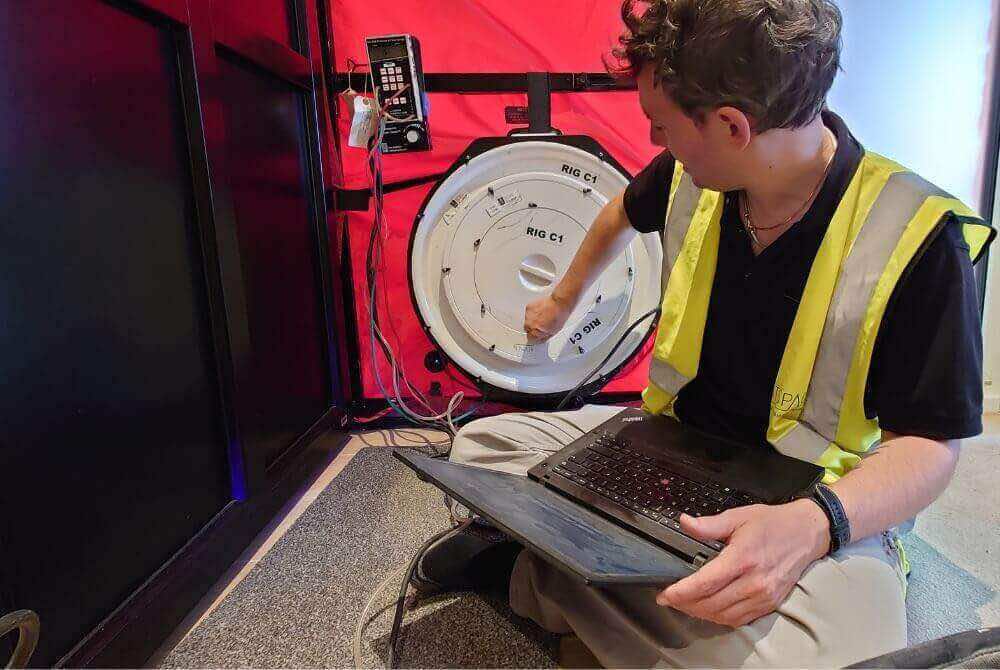
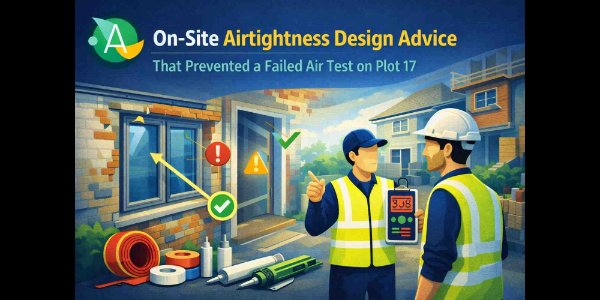
Air leakage on-site design advice is proactive airtightness support that helps the design and site team define the air barrier, review junctions and penetrations, and check workmanship before hidden defects are sealed in. In practice, it sits between pure design and the final test. The aim is simple: make the air barrier clear, buildable and continuous, so the project is not relying on last-minute sealing to hit its target.
Because airtightness problems are far cheaper to solve on drawings than on finished plots or completed façades. ATTMA’s guidance is clear that the earlier problems are identified in design, the more cost-effective the remedies are, and Approved Document L also expects critical details to be checked before they are concealed. On site, that means fewer nasty surprises at handover and less chance of remedial sealing becoming a programme issue.
Yes. Part L compliance depends on more than a final test number, and airtightness design advice helps the team build what the compliance model assumed. In dwellings, the final energy calculation uses the measured air permeability; in non-domestic buildings, the as-built calculation also uses the measured result. Good on-site advice helps protect that design target by dealing with air barrier continuity and workmanship before defects become compliance failures.
Yes. Airtightness and ventilation have to be designed together, not as separate workstreams. Approved Document L explicitly says infiltration should be considered when specifying purpose-provided ventilation and directs users to Approved Document F. If a building is tightened without thinking about the ventilation strategy, you can solve one problem and create another. Good advice keeps the fabric target and ventilation design aligned from the start.
Yes. That is one of the main reasons to use it. ATTMA states that the sooner airtightness problems are identified in design, the more cost-effective the remedies are, and official guidance expects on-site audits before details are concealed. In simple terms, early reviews and site checks move failure risk forward to a stage where it can still be fixed properly, instead of leaving everything to the last certificate-critical visit.
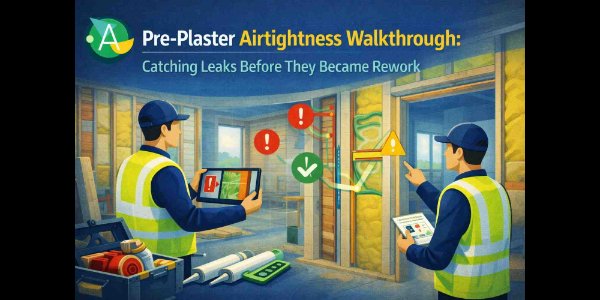
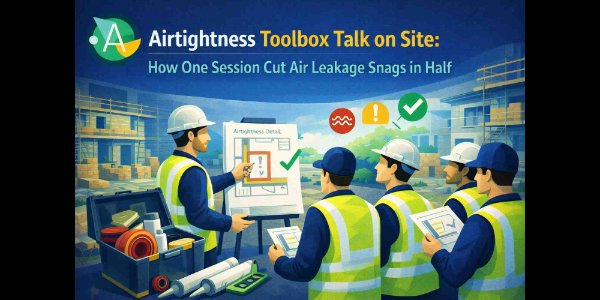
Yes, on most projects you do. Hold points are the moments where airtightness work must be checked before follow-on trades cover it up. The Passivhaus Trust’s guidance says airtightness workshops should discuss hold points and the testing regime so sealing works are checked before hidden areas are allowed to proceed. On real sites, hold points are what stop airtightness becoming somebody else’s problem later in the programme.
Yes, it should. Airtightness, insulation continuity and thermal bridging overlap at the same junctions, so separating them too rigidly usually creates problems. Approved Document L for both dwellings and non-domestic buildings links continuous insulation, limited thermal bridging and buildable details, with on-site audits before details are concealed. Good airtightness advice should therefore review leakage risk and thermal continuity together, especially at floors, openings and roof edges.
Yes, and on those projects it is often most valuable. Approved Document L Volume 2 says that where pressure testing is impractical due to size or complexity, the developer may submit a detailed strategy showing how a continuous air barrier will be achieved, and expert advice should be sought to confirm that strategy. Large or phased buildings usually need earlier coordination, more interim checks and a tighter testing plan than simple buildings.
Yes. Shell-and-core projects need very clear agreement on what the base build is delivering, what assumptions sit in the compliance model and how later fit-out works will connect to the envelope without undermining it. Approved Document L Volume 2 in both England and Wales sets out separate shell-and-core procedures and later first-fit-out requirements. Airtightness advice helps fix those boundaries early, which is exactly where these jobs usually get messy.
Set the target early, define the air barrier clearly, simplify details where you can, keep services away from the airtight layer, run an airtightness workshop, use hold points, inspect before closing up and carry out preliminary leak checks while the barrier is still accessible. That is the pattern repeated across Approved Document L, ATTMA guidance and good-practice airtightness delivery. Projects that pass cleanly usually manage airtightness as a process, not a last-day event.
Videos for air leakage on-site design advice
Explore our videos for quick, engaging insights on building compliance. From step-by-step guides to expert advice, our video library simplifies complex topics, making it easier for you to take action and stay informed. Perfect for when you need clarity in minutes!