Diagnostic Air Leakage Testing:
Covering England and Wales
Need a Diagnostic Air Leakage Test? We offer a fast, reliable, and nationwide service with unmatched expertise. Compliance and quality assurance made easy, hassle-free, and efficient.
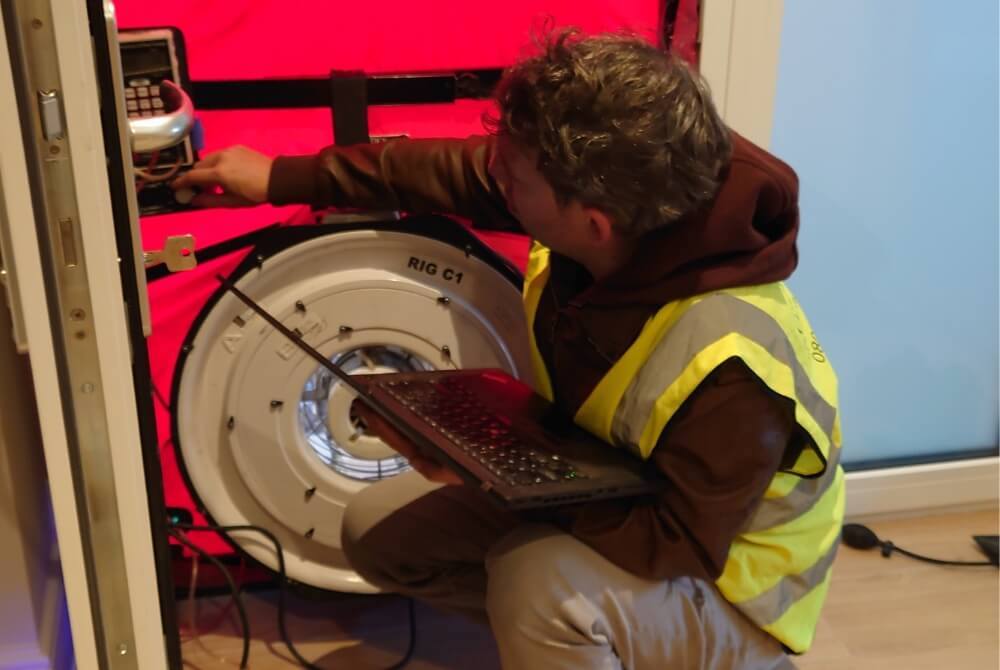
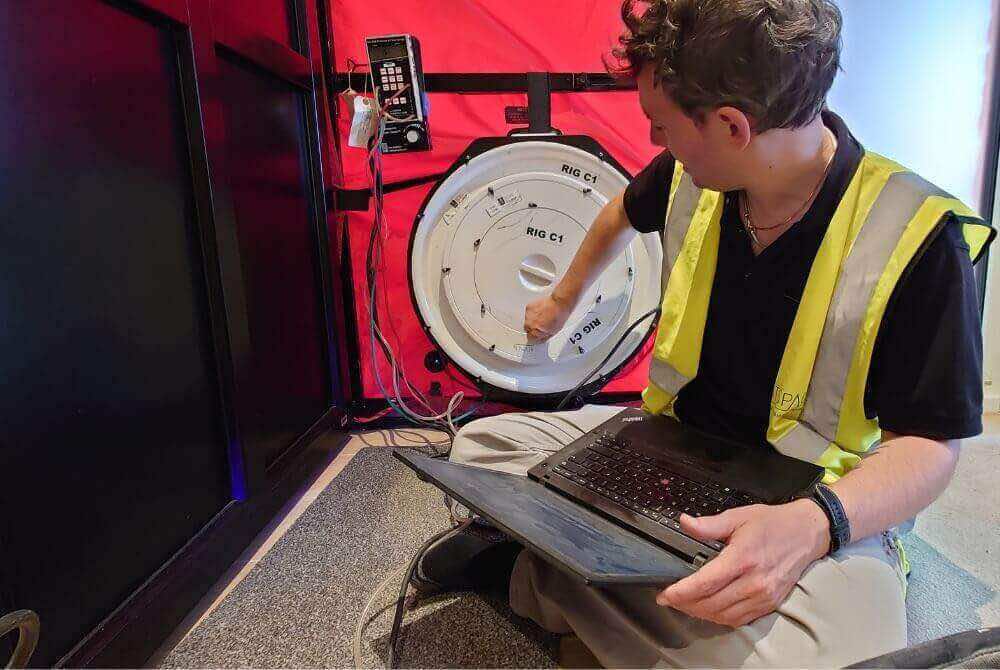
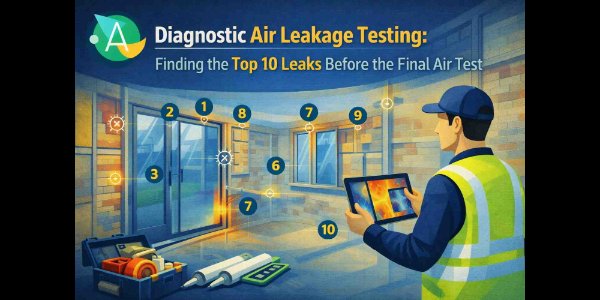
Diagnostic air leakage testing is an investigative airtightness survey used to find where uncontrolled air is leaking, not just how much is leaking. The building is put under a pressure difference so leakage paths become easier to detect, then tools such as smoke, thermal imaging and airflow probes are used to pinpoint the problem areas. It is the practical fault-finding stage that helps teams fix leaks before or after a formal air test.
Diagnostic air leakage testing is for fault-finding; a formal air test is for compliance. A diagnostic visit is there to locate leakage paths, explain why the building is leaking and guide remedial works. A formal Part L pressure test is the one used to produce the measured air permeability result for compliance and Building Control evidence. The two work best together: diagnostics help you fix the problem, and the formal test proves the finished result.
Diagnostic air leakage testing should be used before the formal test if you want the best chance of a first-time pass, and immediately after a failed test if you need targeted remedials fast. It is also useful during retrofit planning, on existing buildings with draught complaints, and on complex sites where airtightness details are hard to verify visually. The earlier it is used, the easier the fixes usually are.
Yes, and that is one of the smartest times to use them. Interim testing is most effective when most of the air barrier has been formed but is still accessible enough to repair properly. That lets the site team fix real leakage paths before dry-lining, ceilings, joinery or fit-out hide the problem and before the compliance test becomes a critical-path event.
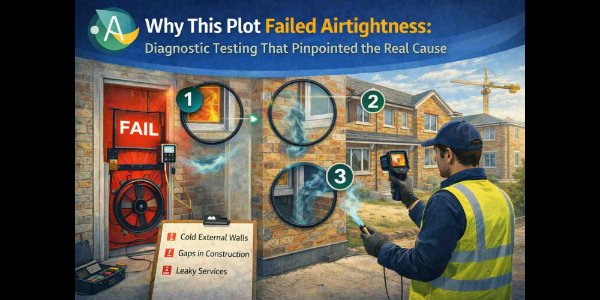
Yes. After a failed air test, diagnostics are usually the fastest way to move from a fail result to a workable remedial plan. Both dwelling and non-domestic guidance require the building to be improved and retested until it meets the relevant criteria, and all failures still have to be reported to Building Control. A diagnostic visit turns that pressure into targeted action rather than guesswork.
No. Building Control sign-off depends on a valid formal pressure test result and the associated compliance evidence, not on a diagnostic survey alone. Diagnostic fans and interim leak-finding tools are useful for identifying problems, but they are not a substitute for a compliant final test result. In plain terms, diagnostics help you get the pass, but they are not the pass.
Yes. Smoke testing is one of the clearest ways to show where air is entering or escaping under a pressure difference. On site, it is particularly effective because it turns an invisible problem into something the contractor, site manager and installer can all see immediately. That makes remedials faster, more targeted and far less reliant on “seal everything and hope” thinking.
Yes. Thermal imaging is a very useful diagnostic tool for identifying areas affected by air leakage, especially when used alongside a pressure difference. It does not replace proper airtightness testing, but it can help the team spot weak details, track leakage paths and focus remedials more efficiently than visual inspection alone. Used properly, it speeds up diagnosis and reduces unnecessary rework.
Yes. Interim and diagnostic testing are among the best ways to improve first-time pass performance because they let you find and fix leakage paths before the formal test. Good-practice guidance says interim testing is essential for airtight buildings and should happen while the air barrier is still accessible. That is how projects stop a tight target becoming a late-stage surprise.
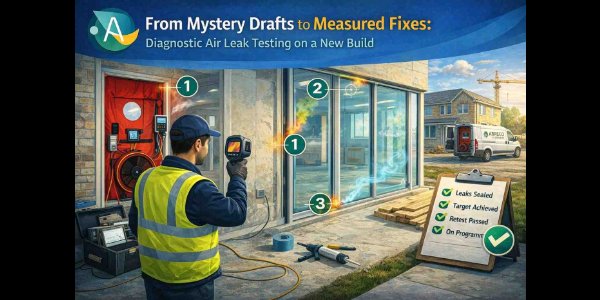
Use it early, use it while the air barrier is still accessible, and use it to verify real fixes rather than cosmetic sealing. The strongest approach is to carry out interim diagnostics before the formal test, target the major leakage paths, re-check the remedials and only then move to final sign-off testing. That is how teams avoid failed tests, reduce rework and keep completion moving.
Videos for diagnostic air leakage testing
Explore our videos for quick, engaging insights on building compliance. From step-by-step guides to expert advice, our video library simplifies complex topics, making it easier for you to take action and stay informed. Perfect for when you need clarity in minutes!