
Diagnostic Smoke Testing:
Covering England and Wales
Need Diagnostic Smoke Testing? We offer a fast, reliable, and nationwide service with unmatched expertise. Compliance and quality assurance made easy, hassle-free, and efficient.
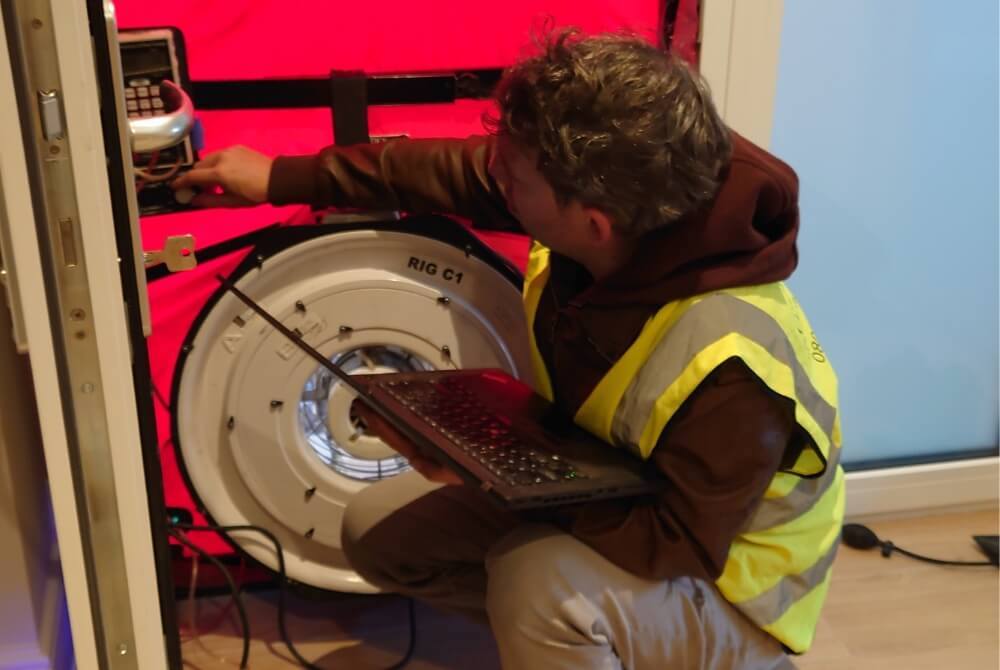
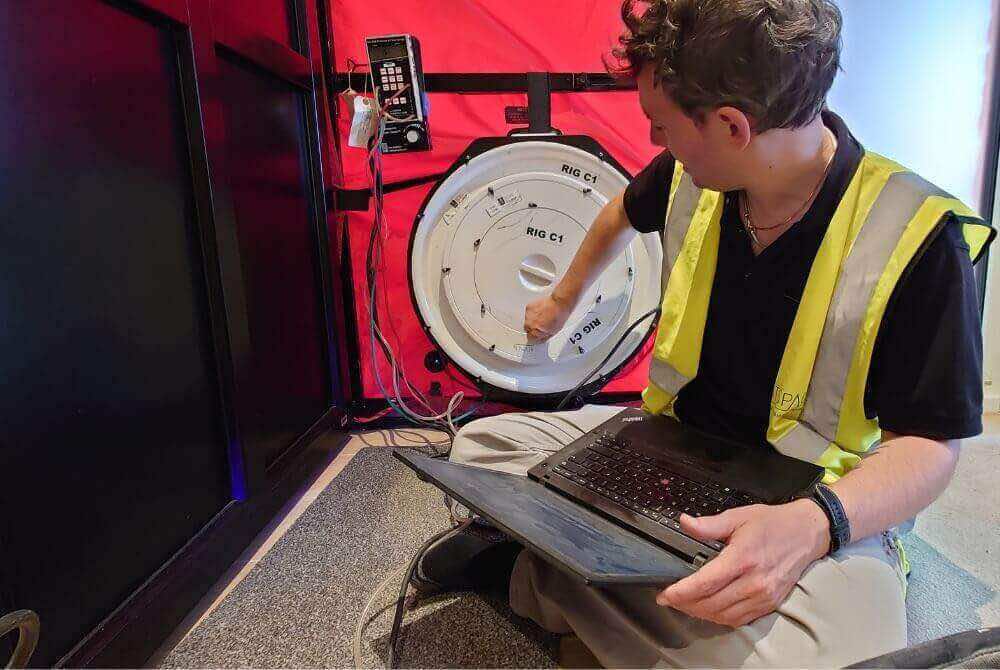
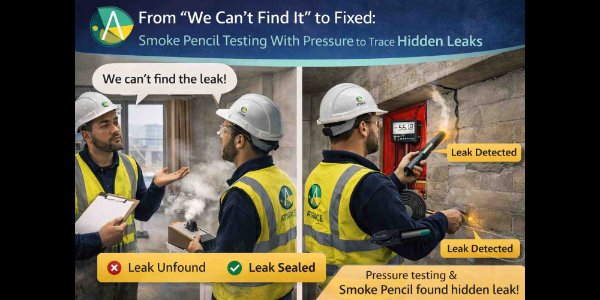
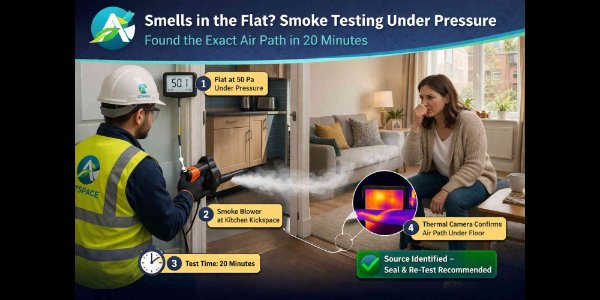
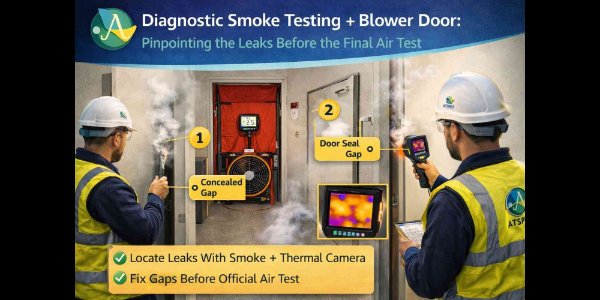
Diagnostic smoke testing is a leak-finding method used alongside air pressure testing to show exactly where uncontrolled air is moving through the building envelope. A blower door or similar fan creates a pressure difference, and smoke pencils or larger smoke generators make the airflow visible so the team can trace the leakage path rather than just read a final number.
Diagnostic smoke testing works because air pressure testing creates the pressure difference that makes hidden leakage paths obvious. During airtightness testing, usually under depressurisation, air is pulled faster through cracks and gaps, so smoke becomes a visual indicator of where the building is actually leaking. In simple terms, the pressure test gives you the condition; the smoke helps you see the cause.
No. A formal air pressure test measures the building’s airtightness result for compliance or certification, while diagnostic smoke testing is there to find the leakage paths that sit behind that result. TM23 covers the formal measurement of building air leakage, whereas smoke diagnostics are the practical site tool that helps the team understand why the building is leaking.
No. Part L requires formal pressure testing in the situations set out in Approved Document L, but diagnostic smoke testing itself is a support service rather than a standalone regulatory requirement. In practice, it is used because it helps teams pass the formal test, avoid late failures and understand the real leakage routes before Building Control paperwork becomes critical-path.
Yes, and that is one of its best uses. Interim testing guidance says the building should be checked while most of the air barrier is still accessible so remedial works can be undertaken properly. Using smoke at that stage helps the site team find the real weak points before plasterboard, ceilings, joinery or fit-out hide the problem and make the final test harder to recover.
Yes. After a failed air test, smoke diagnostics are one of the quickest ways to move from a bad result to a workable remedial plan. Instead of sealing randomly, the site team can see the main leakage paths and fix the defects that are actually hurting the number. Where a formal retest is required, smoke testing helps make that next visit far more focused.
Usually, yes. Good-practice guidance says the pressure differential imposed on a building, usually during depressurisation testing, accelerates airflow through leakage points and makes them easier to identify. That is why many airtightness technicians prefer depressurisation for leak finding. It gives clearer visual movement and often makes hidden leakage paths easier to trace back to source.
The usual culprits are service penetrations, window and door interfaces, thresholds, loft hatches, sockets, meter boxes, dry-lining edges, poor masonry details and awkward junctions. Recent DESNZ research also says airtightness failure points typically relate to the air barrier, junctions, window seals and door seals, with poor sealing and poor workmanship making things worse.
No. Diagnostic smoke testing in relation to air pressure testing is a building-fabric leakage tool. Smoke shaft testing and smoke-control system testing are fire-safety services dealing with smoke ventilation shafts, ducts and life-safety systems under a different standards framework. They may both involve “smoke”, but they are not the same discipline and should not be confused in the specification.
Use it early, use it under meaningful pressure, and use it while the air barrier is still accessible. The strongest process is interim air pressure testing, smoke-based leak tracing, targeted remedials and then formal verification once the defects are fixed. That approach gives the clearest route to first-time pass success, lower rework and a cleaner handover.
Videos for diagnostic smoke testing
Explore our videos for quick, engaging insights on building compliance. From step-by-step guides to expert advice, our video library simplifies complex topics, making it easier for you to take action and stay informed. Perfect for when you need clarity in minutes!