
Ventilation Flow Rate Testing:
Covering England and Wales
Need Ventilation Flow Rate Testing? We offer a fast, reliable, and nationwide service with unmatched expertise. Compliance and quality assurance made easy, hassle-free, and efficient.
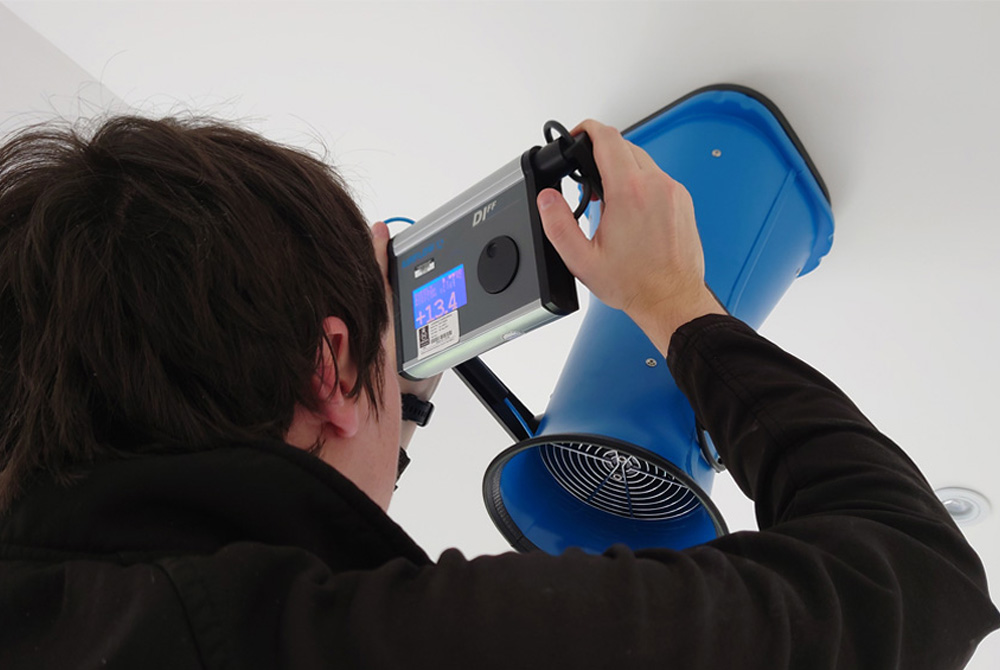
Ventilation flow rate testing is the on-site measurement of how much air a mechanical ventilation system is actually moving at each terminal or fan. In practical terms, it checks whether the installed system is delivering the airflow rates required by Part F, rather than just relying on what the product label or design intent said. On most residential jobs, it is the test people mean when they say a Part F ventilation test or extractor fan flow test.
It is required because Part F is about proving adequate ventilation in the building that was actually installed, not just the one shown on drawings. Approved Document F says mechanical ventilation systems must be commissioned and, for the relevant work, measured so the results show the system is achieving the required flow rates. On site, that makes ventilation flow rate testing a sign-off issue, not a paperwork extra.
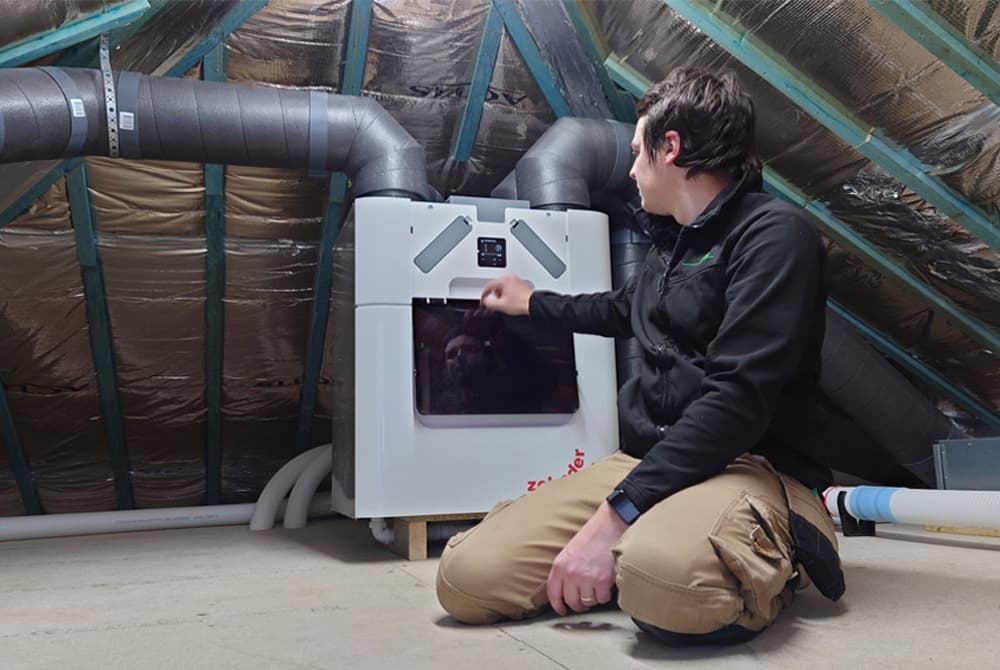
In practical residential terms, this service mainly covers System 1, System 3 and System 4. Those are the fan-based dwelling systems most clients mean when they ask for ventilation flow rate testing: intermittent extract with background vents, continuous mechanical extract, and MVHR. The current Approved Document guidance is written in functional rather than numbered language, but those industry labels are still widely used and still useful for booking and scoping the right test.
Yes. System 1 still includes mechanical extract fans, so the airflow from those fans has to be checked. Approved Document F says airflow testing applies to intermittent extract fans as well as continuous systems, and that the readings must be recorded on the commissioning sheet. The fact that the whole system is “natural plus intermittent” does not take the fan testing out of scope.
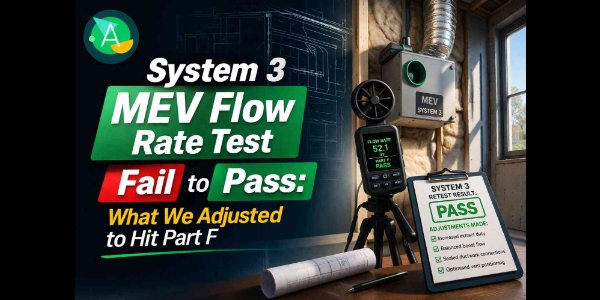
Yes. System 3 is a continuous mechanical system, so airflow measurement and balancing are central to commissioning it properly. Approved Document F says continuous mechanical extract systems should be balanced to achieve design airflow rates at each room terminal, and the measured flows should be recorded. On a live site, System 3 is not something you just power up and assume is fine.
Yes, absolutely. MVHR is a whole-house mechanical system, so both the extract and supply sides need proper airflow measurement and commissioning. Approved Document F treats continuous supply fans and terminals, and MVHR-type systems, as part of the flow-testing regime. In practice, System 4 is the route where poor commissioning is most likely to waste the benefit of a good design.
For System 1 intermittent extract, the key minimum rates are 30 l/s for a kitchen where the cooker hood extracts outside, 60 l/s where it does not, 30 l/s for a utility room, 15 l/s for a bathroom and 6 l/s for sanitary accommodation. These are the baseline Part F numbers the fan test is checking against for intermittent operation.
For the continuous systems, the minimum high-rate extract figures are 13 l/s for a kitchen, 8 l/s for a utility room, 8 l/s for a bathroom and 6 l/s for sanitary accommodation. These are the same high-rate wet-room benchmarks used for both continuous mechanical extract ventilation and MVHR-type systems. They are the key room-by-room boost numbers the commissioning process checks.
They are separate tests, but they are closely linked. Air pressure testing measures uncontrolled leakage through the building fabric, while ventilation flow rate testing measures the purpose-provided ventilation system. Approved Document F uses airtightness thresholds to decide whether natural-ventilation guidance is appropriate, and it also notes that MVHR efficiency improves as the dwelling becomes more airtight. Build tight, ventilate right is not just a slogan; it is how the two compliance strands fit together.
Pass first time by treating ventilation as a commissioned system, not a last-day certificate. Make sure the right system type was chosen for the dwelling airtightness, install the terminals and ductwork properly, leave background ventilators in the correct state for the system, balance System 3 and System 4 properly, and only book the test when the plot is genuinely ready. The projects that pass cleanly are usually the ones that coordinate Part F, airtightness and handover from the start.
Videos for ventilation flow rate testing
Explore our videos for quick, engaging insights on building compliance. From step-by-step guides to expert advice, our video library simplifies complex topics, making it easier for you to take action and stay informed. Perfect for when you need clarity in minutes!