Air Permeability Testing for Commercial Buildings, England and Wales
Need Commerical Air Leakage Testing? We offer a fast, reliable, and nationwide service with unmatched expertise. Compliance and quality assurance made easy, hassle-free, and efficient.
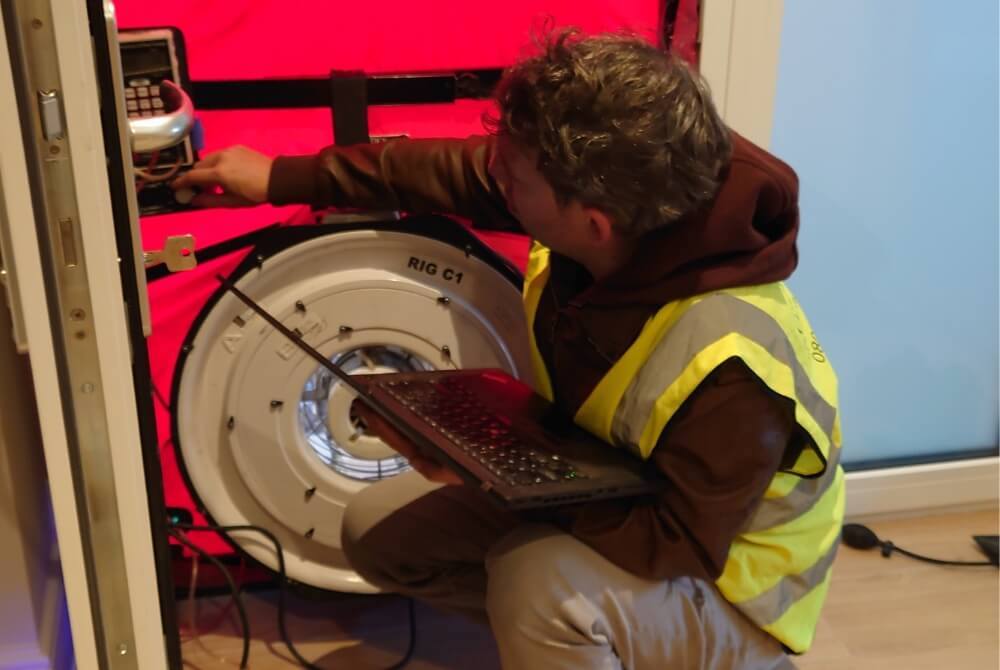
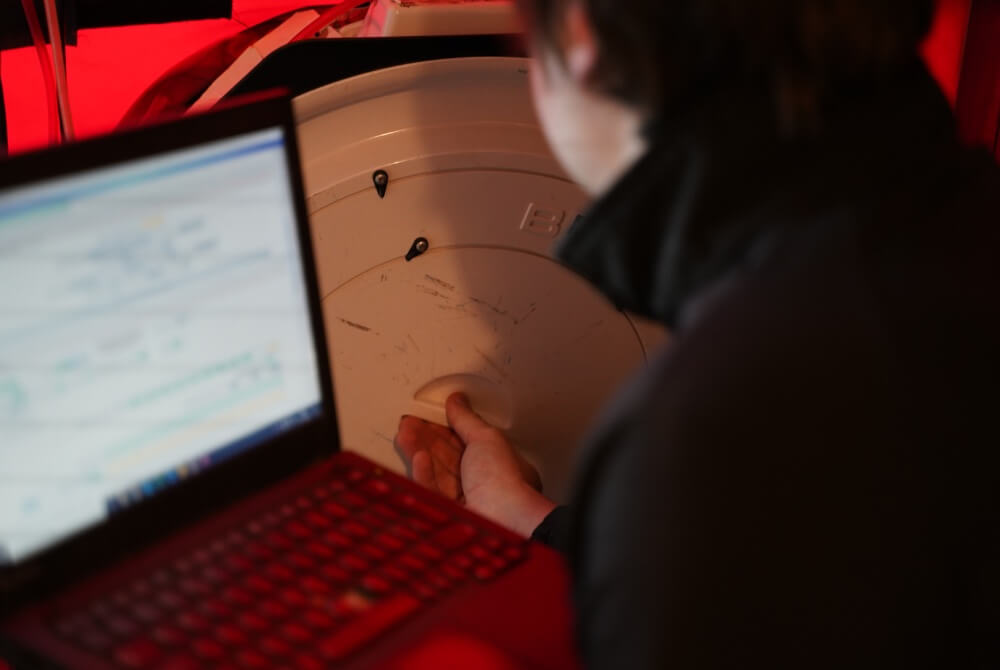
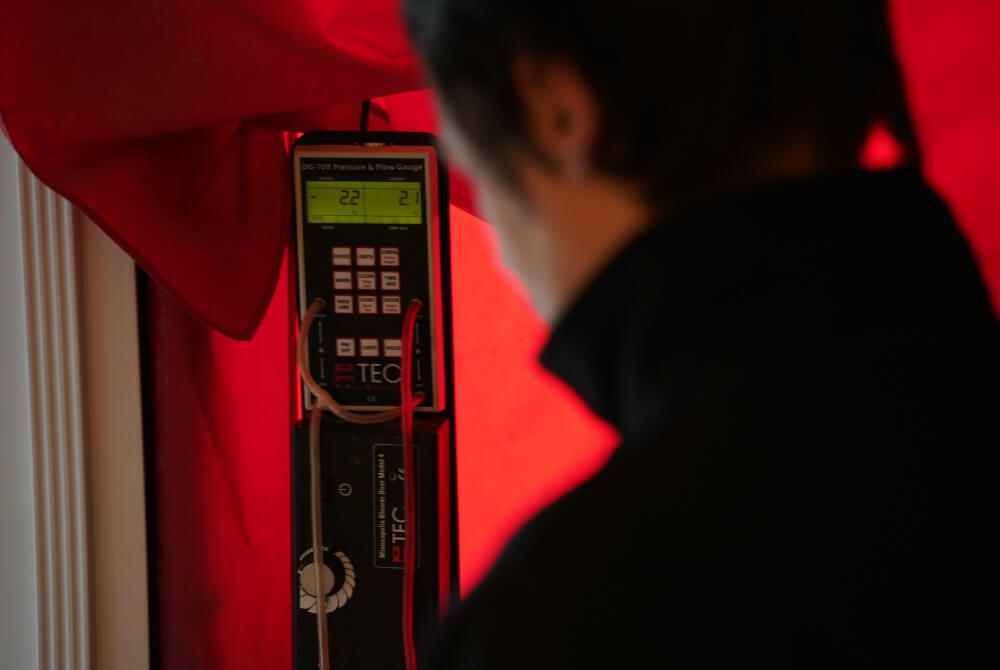
Commercial air leakage testing is a pressure test that measures how much uncontrolled air leaks through the envelope of a building other than a dwelling. The result is reported as air permeability in m³/(h·m²) at 50Pa, which is the standard Part L metric for commercial airtightness testing in the UK. In practice, it tells developers, contractors and Building Control whether the finished building is as airtight as the design and compliance model assumed.
Not always. For a non-domestic building with less than 500m² total useful floor area, the developer can avoid testing if the compliance calculation uses an air permeability of 15 m³/(h·m²) at 50Pa. That sounds convenient, but 15 is a weak default and can make SBEM compliance harder, so small offices, retail units and light industrial shells are often better off being tested properly. There is also a separate data-based route for some factory-made modular buildings under 500m².
The key Part L requirement is that the completed building must meet both the airtightness backstop and the project’s energy model. For new buildings other than dwellings, the limiting air permeability is 8.0 m³/(h·m²) at 50Pa, but the measured result must also keep the as-built BER/BPER no worse than the target rates in the final SBEM/BRUKL submission. As of March 2026, England is still working to Approved Document L Volume 2, 2021 edition incorporating 2023 amendments, while Wales uses its own Volume 2 guidance.
A good result is one that comfortably beats your project-specific target, not just the legal limit. For most commercial schemes, 8.0 m³/(h·m²) at 50Pa is only the backstop, and better-performing projects often need materially tighter results to keep SBEM/BRUKL compliant; in England’s current NCM, notional building air permeability values are 3 or 5 depending on activity type. In practice, “good” means enough margin to protect sign-off, not just enough to survive the day.
No. A commercial building can beat 8.0 and still fail the overall Part L compliance check if the measured air permeability is worse than the value assumed in the as-built model and the BER/BPER ends up above the target. This is a common commercial trap: the air test looks acceptable in isolation, but the full compliance package still fails. Always check the SBEM/BRUKL target, not just the limiting standard.
SBEM is the compliance calculation method behind many commercial Part L submissions, so the air permeability target in the model and the result from the site test have to align. The design-stage value affects the early BRUKL, and the measured result from the finished building is then used in the as-built BER/BPER calculation. That is why commercial air leakage testing should never be treated as a last-minute bolt-on; it needs to be coordinated with the energy assessor from the start.
Commercial air test cost in the UK depends mainly on size, complexity and how much equipment or labour the building needs. Published provider pricing shows simple single-fan commercial tests starting from around £450 + VAT, while larger or more complex buildings are often priced per engineer per day, with examples around £650 to £850 per engineer per day. Pre-test inspections, diagnostics, travel, out-of-hours work and retests usually change the number.
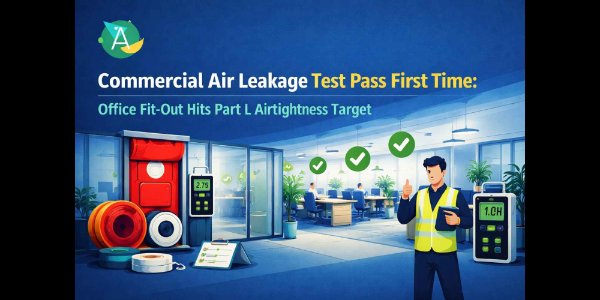
You pass a commercial air test first time by treating airtightness as a build-quality issue, not a last-day certificate issue. Set a realistic design target in SBEM, define the air barrier early, brief every trade that penetrates it, inspect sealing before finishes hide defects, and use a pre-test check before the formal visit. The sites that “get it right first time” are usually the ones that control interfaces and late changes, not the ones that rely on panic sealing at the end.
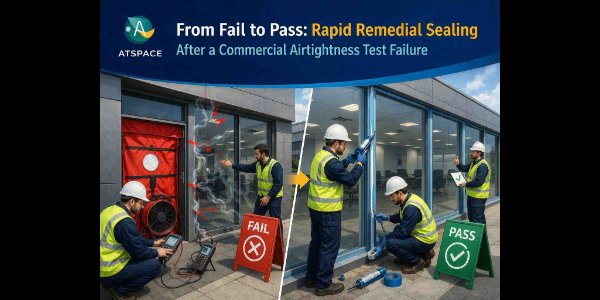
If you fail a commercial air test, the building air permeability has to be improved and the building retested until it meets the required criteria. Approved Document L also requires the results of all pressure tests, including failures, to be reported to Building Control. In real project terms, that can mean remedial sealing, delayed paperwork, disrupted handover and extra cost, so fast diagnosis matters just as much as the retest itself.
A shell-and-core unit should be tested when the base-build envelope is complete enough to represent the landlord handover condition and before tenant works change the compliance picture. Approved Document L recognises shell-and-core situations and requires reasonable assumptions about later services at the early stage, while the as-built calculations at practical completion are based on the building and systems actually constructed. In simple terms, test the shell when it is a real shell, not while scopes are still moving.
Videos for commercial air leakage testing
Explore our videos for quick, engaging insights on building compliance. From step-by-step guides to expert advice, our video library simplifies complex topics, making it easier for you to take action and stay informed. Perfect for when you need clarity in minutes!