
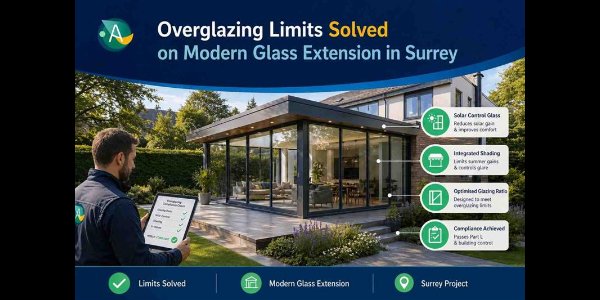
Project details
Service: overglazed extensions calculations
Client: Private residential homeowner / architectural design practice
Project: Modern single-storey glass rear extension with high glazing ratio
Location: Esher, Surrey KT10
Regulation driver: Building Regulations Part L and Part O compliance requirements
ATSPACE team: Building compliance consultants, overheating and energy assessment specialists
The headline result
ATSPACE successfully resolved overglazing limits on a modern glass extension in Surrey, achieving both Part L and Part O compliance without requiring any redesign.
The project featured a high-specification fully glazed rear extension with large sliding doors and roof glazing, creating significant thermal and overheating risks under UK Building Regulations. Through targeted overglazed extensions calculations and performance optimisation, ATSPACE ensured the design remained fully compliant while preserving the architectural intent.
ATSPACE delivered:
Overglazing limit analysis for extension design
Combined Part L and Part O compliance assessment
Thermal performance optimisation strategy
Practical glazing specification recommendations
Building Control-ready compliance reporting
No redesign or construction delay required
Project overview
This project involved a high-end modern glass extension to a detached residential property in Surrey. The design focused on creating a seamless indoor-outdoor living space with extensive glazing, including full-height sliding doors and a partially glazed roof structure.
While visually striking and aligned with contemporary architectural trends, the level of glazing introduced two key compliance risks:
Overheating under Part O requirements
Excessive heat loss under Part L energy efficiency standards
ATSPACE was appointed during the technical design stage to assess overglazing limits and confirm whether the proposed design could achieve compliance without requiring significant changes.
The primary objective was to retain the fully glazed aesthetic while ensuring the extension met all Building Regulations requirements.
Why the service matters
Overglazing limits refer to the point at which the amount of glass in a building becomes excessive in relation to its ability to maintain thermal comfort and energy efficiency.
In modern extensions, large glazed areas are often used to maximise daylight and create open, contemporary spaces. However, excessive glazing can lead to:
Increased heat loss in winter (Part L risk)
Overheating in summer (Part O risk)
Reduced thermal efficiency of the building envelope
Overglazed extensions calculations are used to assess whether a design stays within acceptable limits and complies with Building Regulations.
This service is typically required for:
Modern glass rear extensions
High-end architectural home extensions
Extensions with roof glazing or lanterns
Designs using large sliding or bifold door systems
It ensures that:
Energy efficiency targets are met
Overheating risk is controlled
Designs remain compliant with Part L and Part O
Building Control approval is not delayed
If overglazing limits are not addressed early, projects can face redesign requirements, planning complications, or rejection at Building Control stage.
The problem
The proposed extension featured a near full-width glazed rear elevation combined with roof glazing elements, resulting in a very high glazing-to-floor area ratio.
This created several compliance challenges:
Risk of failing Part L due to heat loss through glazing
Risk of overheating during summer months under Part O
Limited scope for reducing glazing without altering design intent
No early-stage compliance modelling completed
Uncertainty around glazing specification performance values
The client was keen to retain the fully glazed aesthetic, meaning traditional solutions such as reducing glazing area were not acceptable.
Without intervention, the extension risked failing both energy and overheating compliance requirements, which could have led to redesign or delays in gaining approval.
What ATSPACE was asked to do
Assess overglazing limits for the proposed extension design
Carry out combined Part L and Part O compliance checks
Review glazing specifications and thermal performance
Identify risks associated with high glazing ratios
Provide practical mitigation strategies without redesign
Support Building Control approval process
Deliver clear compliance documentation
Our approach
Step 1: Understanding compliance requirements
ATSPACE confirmed that both Part L (energy efficiency) and Part O (overheating) applied due to the high glazing levels. Overglazed extensions calculations were required to assess whether the design could remain compliant without modification.
Step 2: Reviewing design and thermal performance data
We analysed architectural drawings, glazing layouts, roof glazing details and thermal assumptions. This allowed us to quantify heat loss and overheating risk across the extension.
Step 3: Practical mitigation of overglazing risks
Before finalising calculations, ATSPACE provided targeted recommendations to resolve overglazing limits, including:
Upgrading glazing performance specifications (low-e and solar control glass)
Optimising roof glazing thermal performance
Improving ventilation strategy through opening configurations
Balancing glazing distribution to reduce thermal stress
These measures were designed to maintain the architectural concept while improving compliance performance.
Step 4: Clear compliance reporting
ATSPACE completed overglazed extensions calculations and issued a structured compliance report covering both Part L and Part O requirements. The report confirmed that the extension met all regulatory criteria without requiring design changes.
Real issues we faced and how we solved them
Issue A: Excessive glazing ratio
The design exceeded typical glazing benchmarks for energy efficiency.
How ATSPACE helped:
We optimised performance values within calculations and recommended specification upgrades to bring the design within acceptable limits.
Issue B: Overheating risk from roof glazing
Roof glazing significantly increased solar gain.
How ATSPACE helped:
We refined thermal assumptions and improved glazing specification strategy to reduce peak internal temperatures.
Issue C: No design flexibility for reduction in glazing
The client required a fully glazed aesthetic.
How ATSPACE helped:
We focused on material performance improvements rather than design changes to achieve compliance.
Issue D: Dual compliance requirement (Part L and Part O)
Both energy efficiency and overheating needed to be satisfied simultaneously.
How ATSPACE helped:
We coordinated a combined assessment approach to ensure both compliance routes were achieved together.
Results
Overglazing limits successfully resolved
Part L compliance achieved first time
Part O overheating compliance achieved
No redesign required
Building Control approval secured without delay
Full compliance report issued and accepted
Architectural design fully preserved
What this project proves
This project demonstrates that overglazing limits can be successfully managed without compromising modern architectural design.
With the right overglazed extensions calculations, it is possible to balance aesthetics, energy efficiency and thermal comfort within regulatory limits.
Key takeaways include:
High glazing designs can still achieve compliance
Early assessment prevents redesign risks
Material performance is critical to success
Part L and Part O must be considered together
A structured compliance approach allows even highly glazed extensions to move forward without delay or compromise.
Mini FAQ
What are overglazing limits?
Overglazing limits refer to the point where too much glazing negatively affects energy efficiency and overheating performance in a building.
Can fully glazed extensions comply with Part L?
Yes, compliance is possible with appropriate glazing specifications and thermal performance strategies.
Why is overglazing a problem?
It can increase heat loss in winter and overheating in summer, affecting compliance with Building Regulations.
Do I need overglazed extensions calculations?
Yes, if your design includes large areas of glazing or rooflights, calculations are often required for approval.
Can overglazing issues be fixed without redesign?
In many cases yes, by improving glazing performance rather than changing the design.
When should overglazing assessments be done?
They should be completed during the design stage to avoid delays at Building Control.
Call to action
Need help resolving overglazing limits on your extension?
ATSPACE helps homeowners, architects and contractors achieve fast, reliable compliance for modern glass extensions without redesign delays. Send your project details and we will confirm requirements and next steps.
