
Project details
Service: overglazed extensions calculations
Client: Private homeowner / residential design & build contractor
Project: Rear and side kitchen extension with high glazing ratio and rooflights
Location: Richmond, London TW10
Regulation driver: Building Regulations Part L (energy efficiency compliance)
ATSPACE team: Building energy compliance consultants, overheating and Part L specialists
The headline result
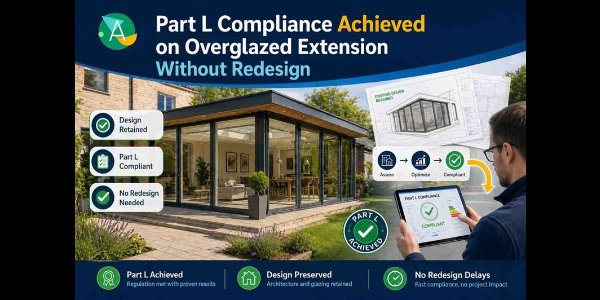
ATSPACE delivered Part L compliance for an overglazed extension without requiring any redesign, achieving first time approval and avoiding delays to the construction programme.
The project involved a highly glazed rear and side kitchen extension, including large sliding doors and multiple rooflights. Despite the increased heat loss and gain risk associated with high glazing levels, ATSPACE demonstrated compliance through detailed overglazed extensions calculations aligned with Part L requirements.
ATSPACE delivered:
Energy compliance review of extension design
Overglazed extensions calculations for Part L compliance
Assessment of glazing performance and thermal efficiency
Practical improvement recommendations without redesign
Building Control-ready compliance documentation
First time approval with no programme delay
Project overview
This project involved a domestic rear and side kitchen extension to a detached property in South West London. The design focused on creating a bright, open-plan kitchen and dining space with strong connections to the garden through large glazed openings and rooflights.
While the architectural intent was clear, the level of glazing introduced challenges under Part L of the Building Regulations, which focuses on energy efficiency and thermal performance. High glazing ratios can increase heat loss in winter, impacting overall building performance and compliance.
ATSPACE was appointed during the technical design stage to complete overglazed extensions calculations to confirm Part L compliance before submission to Building Control. The key requirement was to ensure the extension could proceed without redesign, delay or loss of design quality.
The challenge was to balance energy performance requirements with the client’s desire for a highly glazed, modern extension.
Why the service matters
Overglazed extensions calculations for Part L compliance assess whether a domestic extension meets energy efficiency standards when high levels of glazing are introduced into the building envelope.
Part L of the Building Regulations ensures that buildings are designed to reduce heat loss, improve thermal efficiency and minimise energy demand. In extensions, glazing is one of the most critical factors affecting compliance.
This service is typically required for:
Domestic kitchen extensions with large glazing areas
Side-return and rear extensions with rooflights
Designs using full-height sliding or bifold doors
Energy compliance submissions for Building Control approval
The calculations ensure that:
Heat loss through glazing is controlled
Fabric performance meets regulatory requirements
Energy efficiency targets are achieved
The extension does not negatively impact the existing dwelling’s performance
If overglazed extensions calculations are not completed early, projects may face redesign requirements, rejection by Building Control, or costly changes to glazing specification at a late stage.
The problem
The proposed extension included extensive glazing across both rear and side elevations, as well as multiple rooflights. While this created a high-quality architectural design with excellent daylighting, it also increased the risk of failing Part L compliance due to higher heat loss.
Key issues identified included:
High proportion of glazing compared to solid wall areas
Limited insulation improvement opportunities in existing structure
Rooflights increasing overall thermal loss
Uncertainty around glazing specification performance values
No initial energy compliance modelling completed
The project also had a strict requirement to avoid redesign, meaning any compliance solution needed to work within the existing architectural layout and glazing concept.
Without intervention, there was a risk that the extension would fail Part L requirements, resulting in delays and potential redesign of glazing systems.
What ATSPACE was asked to do
Carry out overglazed extensions calculations for Part L compliance
Assess energy performance impact of proposed glazing design
Review thermal efficiency of building envelope
Identify compliance risks early in the design process
Provide practical mitigation options without redesign
Support Building Control submission requirements
Deliver compliant energy performance documentation
Our approach
Step 1: Understanding the compliance requirement
ATSPACE confirmed that the project required compliance with Part L due to the extent of new glazing introduced by the extension. Overglazed extensions calculations were required to assess energy performance impact and ensure compliance could be demonstrated.
Step 2: Reviewing design and thermal assumptions
We reviewed architectural drawings, glazing specifications, rooflight placements and thermal assumptions. This allowed us to assess heat loss risk and identify areas where performance improvements could be achieved without altering the design.
Step 3: Practical energy efficiency recommendations
Before final calculations, ATSPACE provided practical advice to improve compliance outcomes, including:
Optimising glazing specification (low-e performance improvements)
Reviewing rooflight thermal values to reduce heat loss
Improving overall fabric performance assumptions
Balancing glazing distribution to reduce thermal impact
These recommendations were designed to maintain the design intent while improving energy performance.
Step 4: Clear Part L compliance reporting
ATSPACE completed overglazed extensions calculations and produced a structured Part L compliance report. The documentation demonstrated that the extension met all relevant energy efficiency requirements and was suitable for Building Control approval.
Real issues we faced and how we solved them
Issue A: High glazing-to-wall ratio
The design heavily favoured glazing over solid wall construction.
How ATSPACE helped:
We assessed thermal impact and recommended glazing specification improvements to offset heat loss without altering the design layout.
Issue B: Rooflight thermal performance concerns
Multiple rooflights increased overall energy loss.
How ATSPACE helped:
We refined performance assumptions and advised on specification upgrades to improve thermal efficiency.
Issue C: Limited fabric upgrade scope
The existing structure limited opportunities for insulation improvements.
How ATSPACE helped:
We optimised calculation inputs and focused on glazing performance to achieve compliance without structural changes.
Issue D: Need for no redesign solution
The client required compliance without altering the architectural design.
How ATSPACE helped:
We developed a compliance strategy focused on material performance adjustments rather than design changes.
Results
Part L compliance achieved first time
No redesign required to glazing or layout
Building Control approval secured without delay
Overglazed extensions calculations accepted
Energy efficiency requirements fully satisfied
Client retained original design intent
Programme delivered on schedule
What this project proves
This project demonstrates that Part L compliance can be achieved even in highly glazed extensions when overglazed extensions calculations are carried out early and accurately.
Energy compliance is not just a regulatory hurdle, it is a design optimisation tool that allows projects to balance aesthetics with performance.
When managed properly, it enables teams to:
Retain modern glazed design features
Avoid costly redesigns
Meet Building Regulations efficiently
Deliver energy-efficient homes without compromise
Early assessment is key to avoiding compliance issues and ensuring smooth Building Control approval.
Mini FAQ
What are overglazed extensions calculations for Part L?
They are assessments used to determine whether a glazed extension meets energy efficiency requirements under Part L of the Building Regulations.
Do all extensions need Part L calculations?
Most extensions require some level of energy compliance assessment, especially those with significant glazing.
Why is glazing important in Part L compliance?
Glazing typically has higher heat loss than insulated walls, which can affect overall building energy performance.
Can I have a fully glazed extension and still comply?
Yes, compliance is possible with the right glazing specifications and thermal performance strategy.
When should Part L calculations be done?
They should be completed during the design stage to avoid redesign or approval delays.
Can ATSPACE help if design is already fixed?
Yes, ATSPACE specialises in achieving compliance without requiring design changes wherever possible.
Call to action
Need help with overglazed extensions calculations for Part L compliance?
ATSPACE helps homeowners, contractors and designers achieve fast, reliable energy compliance without redesign delays. Send your project details and we will confirm requirements and next steps
