Overview
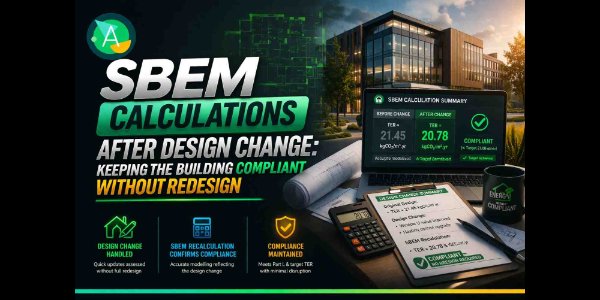
A late design change put a commercial building at risk of falling out of Part L compliance. The client needed a fast answer and wanted to avoid a redesign cycle that could disrupt the programme. ATSPACE updated the SBEM model, quantified the impact, and produced a short list of practical adjustments that recovered compliance without altering the building form or reopening the design.
Project Snapshot
Service: SBEM calculations and compliance recovery
Client: Developer and principal contractor
Site: Riverside Works, Unit 2, 27 Wharf Road, Nottingham NG2 3BR
Building type: Commercial building with office and production support areas
Floor area: Approx. 5,800 m²
Stage: Late technical design → procurement
Design change: Services and specification adjustment driven by procurement and coordination
Compliance driver: Building Regulations Part L (non-domestic)
ATSPACE delivery:
- SBEM recalculation
- Compliance impact review
- Recovery options
- Updated outputs and evidence requirements
Team: ATSPACE building performance engineer and compliance coordinator
Why Design Changes Cause Compliance Problems
Most design changes are sensible and unavoidable — driven by cost, lead times, coordination and maintenance access.
However, some seemingly small adjustments can have a major impact on SBEM outputs, especially changes to:
- lighting efficacy and lighting controls
- HVAC efficiencies and control strategy
- ventilation fan power and heat recovery
- glazing performance and solar control
- setpoint schedules and zoning assumptions
On this project, the change affected a high-impact variable, so the SBEM model had to be updated immediately.
What ATSPACE Was Asked to Do
The contractor needed clear, rapid support to:
- confirm whether the proposed change affected compliance
- update the SBEM model with revised inputs
- identify the specific element causing the risk
- recommend practical, low-disruption recovery measures
- avoid a redesign that would affect layouts or programme
What ATSPACE Did
Step 1: Rapid SBEM Update
We applied the revised specification to the model and compared the outcome to the previously compliant position. This showed instantly whether the project had shifted out of compliance and by how much.
Step 2: Identify the Dominant Driver
Instead of presenting a broad list of possibilities, we isolated the primary factor affecting compliance. Common examples include:
- reduced lighting efficacy or poorer control performance
- plant efficiency reductions
- ventilation changes increasing fan energy or reducing heat recovery
Knowing the dominant driver avoids unnecessary changes elsewhere.
Step 3: Create a Practical Recovery Plan
We proposed measures that:
- avoid any change to building form
- fit within procurement and installation constraints
- are easy to evidence at as-built stage
- protect comfort and operational intent
Typical low‑disruption levers include:
- tightening lighting controls in key zones
- improving plant control or choosing a more efficient variant within the same system family
- refining zoning or schedule assumptions to match real operation
- adjusting ventilation inputs to remove unnecessary fan energy
- verifying glazing and solar control are delivered as designed
The focus was on realistic, buildable changes.
Step 4: Issue Updated Outputs and Evidence Requirements
We supplied updated SBEM outputs plus a clear list of evidence requirements to ensure the recovered position was maintained through to completion.
Issues Prevented
1. Non‑Compliance Discovered at Completion
Without an SBEM update, the project could have reached completion with a compliance failure — expensive and disruptive to fix late.
2. Overreaction and Redesign
Teams often jump straight to redesign, but targeted adjustments are usually sufficient.
ATSPACE ensured the contractor stayed on programme without changing architectural elements.
Outcome
The building remained compliant with Part L without redesign.
Project outcomes:
- design change impacts identified quickly
- compliance recovered using targeted measures
- procurement and coordination progressed as planned
- clear evidence trail ensured compliance at as-built stage
Common Mistakes This Project Avoided
- approving design changes without checking SBEM impact
- discovering non-compliance at end stage
- applying broad changes instead of addressing the main driver
- relying on optimistic assumptions that cannot be evidenced
- redesigning unnecessarily when easier solutions exist
Call to Action
If a design change is putting your Part L position at risk, ATSPACE can:
- update SBEM rapidly
- explain the impact clearly
- provide practical recovery options
- give you updated outputs & evidence lists
Ask for:
- SBEM recalculation after design or procurement change
- Compliance impact assessment and recovery options
- Updated SBEM outputs for sign-off
- Evidence requirements for as-built compliance
Frequently Asked Questions
What changes affect SBEM compliance most?
Typically:
- lighting performance and controls
- HVAC efficiencies and controls
- ventilation and fan power
- glazing and solar control
- zoning and scheduling assumptions
Can compliance be recovered without redesign?
Often yes — especially when the root cause is identified early and adjustments target the dominant driver.
When should SBEM be updated after a proposed change?
Immediately. Early checks provide more options and avoid late-stage disruption.
