
With all the regulations and check lists asked of you when you build, sometimes it’s hard to keep up and know exactly when and if you need a certain service to sign off. A primary statutory requirement under Approved Document E involves acoustic compliance, where sound testing building regs verify that separating structures deliver required sound attenuation before final sign-off.
So, first of all, do you need a sound test?
You will only need a sound test for the following types of dwelling, flats, semi-detached and terrace houses. Basically, any dwelling that shares its walls or floor/ceilings with another dwelling must be sound tested. They apply to new builds and also conversions, unless the project registered with and followed approved Robust Details specifications. Under Approved Document E, sound testing building regs apply whenever pre-completion testing is chosen for new domestic builds or material changes of use.
Once you establish that you need one, when exactly do you have a test carried out?
This test is a pre-completion test, so it must be completed before the dwelling is signed off. To satisfy sound testing building regs, testing must occur before completion, and it is advised that it is carried out once the building envelope is fully sealed and after the following works have been completed. You can also use this as a checklist when building;
• All glazing, internal and external doors must be installed and closed with all relevant fixtures in place, i.e., door handles and seals to prevent acoustic flanking
• All ventilation and trickle vents must be installed and closed during the measurement period
• Walls, floors and ceilings must be complete, without any finishes applied (bare screed or floorboards are required for impact testing; carpets or soft finishes must not be laid)
• Skirting, sockets and light switches must be fitted with back boxes sealed
• Minimise the trades working on site, as well as the use of power tools and plant traffic to avoid corrupting background noise levels
• Businesses must be closed during the duration of the testing if testing between them (residential to commercial)
• No personnel or inhabitants can be present during testing, tests can be more than 100dB
• 240v/50Hz mains power must be available within the dwelling or stable generator power supplied for testing equipment
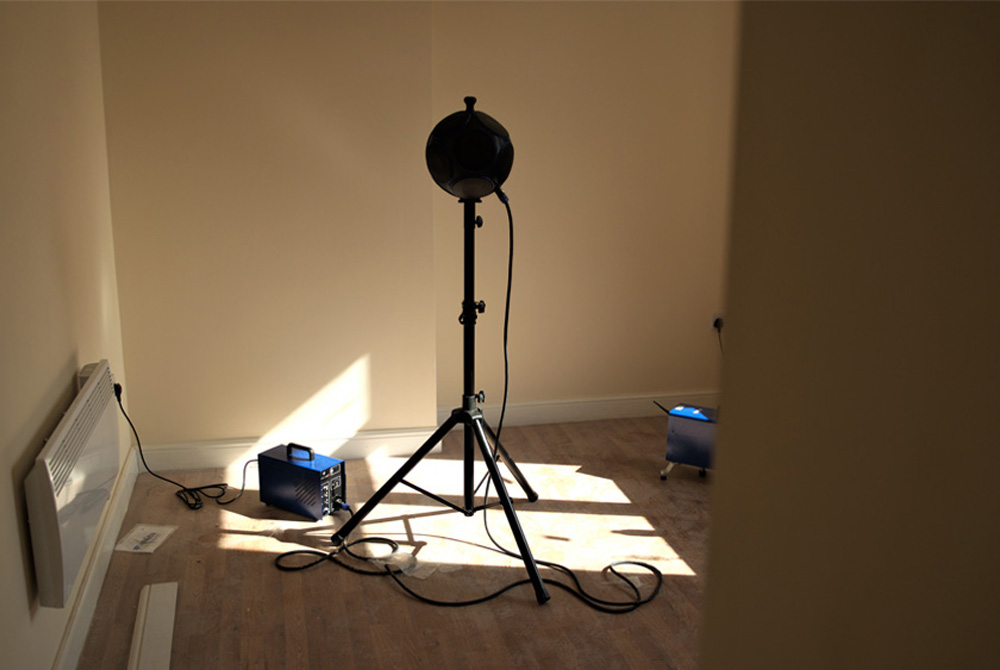
When all the above is complete, you should carry out testing. During on-site evaluation for sound testing building regs, engineers perform airborne tests on separating walls and floors, alongside impact testing on separating floors using a standardised tapping machine.
Approved Document E Performance Thresholds:
For new build houses and flats, separating walls require an airborne sound insulation of at least 45 dB (DnT,w + Ctr), separating floors require at least 45 dB (DnT,w + Ctr) airborne, and impact sound on floors must not exceed 62 dB (L'nT,w). For material change of use (conversions), separating walls and floors require at least 43 dB (DnT,w + Ctr) airborne, and impact sound must not exceed 64 dB (L'nT,w).
Alternative Compliance Route: Pre-completion testing is mandatory on separating elements unless the developer has registered with Robust Details Ltd prior to commencing construction and builds strictly in accordance with approved Robust Details design specifications.
If you need assistance preparing your site or booking sound testing building regs, contact ATSPACE on 0345 6465 454. Quote requests received between 8am and 4pm Monday to Friday receive same-day responses, and compliance certificates are issued next-day following completed on-site testing.
