A New Build/Conversion Domestic EPC Assessment is the SAP-based energy assessment used for a newly constructed dwelling, including a new home created by conversion or change of use. It is not the existing-house EPC route. In practice, it is the assessment used to generate the domestic EPC for a new dwelling and to support the wider energy-compliance process around that dwelling.
No. This service is for new-build dwellings and new dwellings created by conversion or change of use, not for standard existing-house EPCs. Official guidance is clear that RdSAP is the simpler method used for existing dwellings, whereas SAP is the approved methodology for a newly constructed dwelling.
SAP is the government-approved methodology for producing an EPC for a newly constructed dwelling, while RdSAP is the simplified method used for existing dwellings where less information is readily available. In simple terms, SAP is the detailed new-build/conversion route; RdSAP is the existing-home route built around assumptions.
Because official EPC guidance treats new dwellings as covering new builds, conversions and change of use of existing properties. That means a newly created flat, house or dwelling unit formed by conversion sits on the new-dwelling SAP side of the regime, not the ordinary existing-house RdSAP side. That distinction is exactly why this service is different from a standard resale EPC.
For EPC purposes, official guidance says new dwellings cover new builds as well as conversions and change of use of existing properties. The glossary gives examples such as converting a house into self-contained flats or changing a church into a dwelling. So the key question is whether you are creating a new dwelling unit, not simply working on an old house.
Yes. Official EPC guidance explicitly includes converting a house into self-contained flats within the “new dwellings” category, and Approved Document L also treats a material change of use as including a building that contains a greater or lesser number of dwellings than before. In practical terms, a house-to-flats scheme sits squarely within this service.
Yes, if the project is creating dwellings. Official EPC guidance explicitly includes change of use of existing properties within “new dwellings”, and the glossary even gives changing a church into a dwelling as an example. Approved Document L also treats a building becoming a dwelling where it was not before as a material change of use.
Yes. Current official technical notes say it is a legal requirement for all new build domestic dwellings in England and Wales to have an EPC once completed. That is the baseline rule. In practice, developers may also lodge one earlier on the planned design and then update it later if the dwelling changes during construction.
Yes. Official technical notes say EPCs for new dwellings may be lodged earlier based on the planned design, even though the legal requirement is that the dwelling must have an EPC once completed. On real projects, that is why a predicted or design-stage EPC route is often used for programme, marketing or sales support before the final as-built version is lodged.
Yes. Official technical notes say it is not unusual for a new dwelling to have more than one EPC lodged on the Register. The typical reason is that one may be based on the planned design, and another may then be lodged if the dwelling changes during construction or when the final as-built information is ready.
A domestic EPC is normally valid for 10 years, or until a newer EPC is produced for the same building sooner. That is the standard England and Wales rule. So a new-build or conversion EPC does not need renewing annually, but it can be superseded if a later valid certificate is lodged.
For a newly constructed building, the EPC can only be produced by an accredited on-construction domestic energy assessor. The regulations guidance is explicit on that point. It is not the same assessor route as a standard existing-dwelling EPC carried out under the ordinary domestic energy assessor / RdSAP workflow.
An on-construction domestic energy assessor is the accredited assessor type used for EPCs on newly constructed dwellings. The official guidance for dwellings says that where the building is newly constructed, the EPC can only be produced by this on-construction assessor type. In practical terms, that is the assessor you need for new build and conversion-created dwellings, not the standard existing-home EPC route.
SAP is the methodology the government uses to estimate the energy performance of dwellings and to generate EPCs for homes. In the new-dwelling context, it models the dwelling’s performance from its fabric and fixed services rather than from actual occupant bills. For this service, SAP is the calculation engine sitting behind the new-build or conversion domestic EPC.
A domestic EPC shows the dwelling’s energy efficiency rating, gives advice on how the energy performance could be improved, and is intended to provide buyers or tenants with standardised information about the building’s performance. It is an asset rating, so it reflects the building fabric and services rather than the exact habits of the person living there.
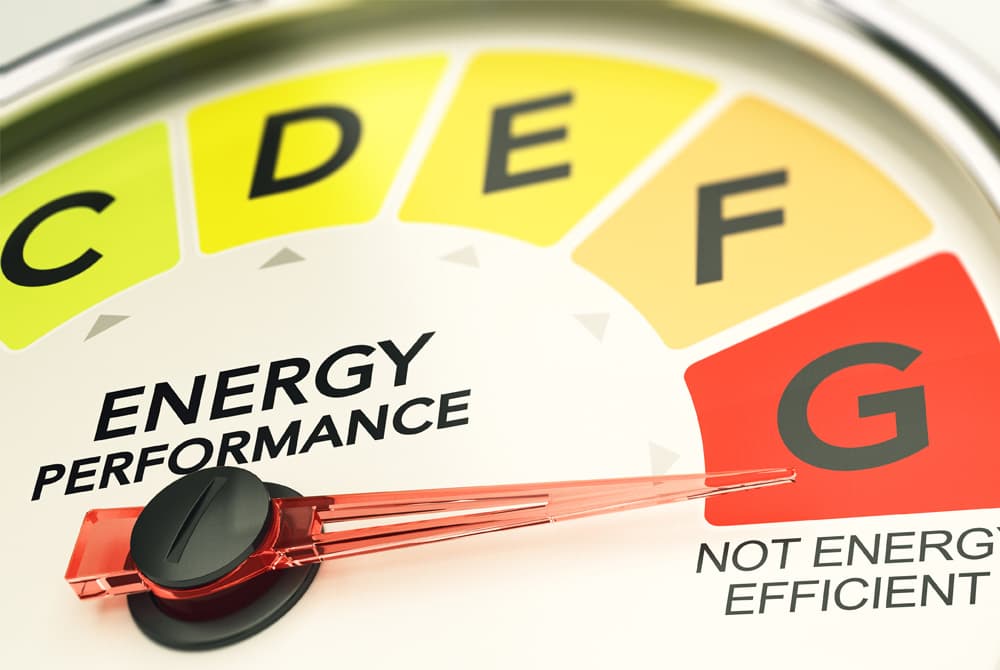
The headline domestic EPC score is the Energy Efficiency Rating (EER), also known as the SAP rating. Government’s technical annex says this is the main domestic headline metric shown at the top of the certificate and in the familiar chart. In practical terms, this is the A-to-G style rating most buyers, lenders and developers focus on first.
The Environmental Impact Rating (EIR) is the domestic EPC’s emissions-related rating. Government’s EPC technical annex explains that it sits alongside the headline energy rating and reflects the dwelling’s environmental impact in carbon terms. It is not currently the main headline number on a domestic EPC, but it still forms part of the certificate output.
No. Official EPC guidance says the rating uses standard occupancy assumptions, which may be different from the way the building is actually used. That means actual bills can vary because real households heat, ventilate and occupy homes differently. In simple terms, the EPC is a standardised comparison tool, not a promise of your exact future bill.
No. The EPC is part of the overall energy-performance picture, but it is not the whole Part L evidence package on its own. For new dwellings, Approved Document L also relies on the relevant BREL or BRWL compliance report and associated evidence to show that what was designed is what was built. So the EPC matters, but it is not the only Part L document.
A BREL report is the Building Regulations England Part L compliance report for a new dwelling. Approved Document L says the BREL report and photographic evidence should be provided to the building control body and to the building owner, and that SAP 10 produces it as a standard output. It is a core England Part L document alongside the new-dwelling EPC.
A BRWL report is the Building Regulations Wales Part L compliance report for a new dwelling. The Welsh Approved Document L says the BRWL report and photographic evidence should be provided to building control and to the building owner, and that approved SAP software should produce it as a standard output. It is the Welsh equivalent of the England BREL workflow.
The design-stage SAP is based on the dwelling as designed before work starts, while the as-built SAP is based on the dwelling as actually constructed. Approved Document L in both England and Wales requires two versions of the compliance report: first the design-stage report, then the as-built report with any changes to the specification captured. That is why late changes matter so much.
It should be done early enough to inform compliance and specification before works begin. Approved Document L says the first BREL / BRWL report is the design stage report and is produced before works begin. In practical terms, that means you do not leave the SAP assessment until site has already fixed the envelope and services package.
The final EPC should be finalised once the dwelling is actually built and the as-built information is reliable, because the dwelling must have an EPC once completed. Approved Document L also requires the as-built compliance report and supporting evidence to reflect what was finally installed. In practice, that means the final EPC belongs at the end of the build, not at the start.
You normally need the detailed floor plans, layout information and specification data for the dwelling. Official EPC glossary guidance says a SAP EPC for a newly constructed dwelling is carried out off site using detailed floor plans and specifications, and the BREL / BRWL process also requires supporting lists of specifications. The better the information, the cleaner the assessment.
Yes. That is one of the main differences between this service and an existing-house EPC. Official guidance says a SAP EPC for a newly constructed dwelling is typically carried out off site using the dwelling’s detailed floor plans and specifications. That is why this service is design-and-specification led, not a reduced-data walk-round of an existing house.
Yes. Official technical notes say a new dwelling may have more than one EPC lodged because the design can change during construction, and Approved Document L requires the as-built report to record changes from the design-stage specification. In practical terms, product substitutions, heating changes and fabric changes can all move the final SAP and EPC output.
Yes, in normal practice each self-contained dwelling unit needs its own domestic EPC. Official EPC guidance says any reference to a building includes a building unit, and “new dwellings” explicitly includes things like turning a house into self-contained flats. So if your conversion creates separate flats, each one should be treated as its own dwelling for EPC purposes.
Approved Document L allows buildings containing more than one dwelling to be handled through individual-dwelling or certain averaged compliance approaches, but it also says information and photographic evidence should still be provided for each individual dwelling. For EPC purposes, the self-contained dwelling units are still treated as building units. So blocks may have one wider compliance strategy, but the dwellings still need individual domestic EPC outputs.
Not usually. This service is for new dwellings and new dwelling units created by new build, conversion or change of use. Approved Document L distinguishes between new elements in existing dwellings, including extensions, and the separate category of material change of use to a dwelling. So a standard extension to an existing house is not normally a new-build/conversion domestic EPC assessment job.
No, not normally. If the work is just altering an existing house and not creating a separate new dwelling, it does not sit in the same category as a new-dwelling EPC assessment. Official guidance distinguishes existing-dwelling work from the “new dwellings” category, and RdSAP remains the simplified existing-home route where an EPC is needed for the existing dwelling later on.
Yes. Official EPC guidance says new dwellings include conversions and change of use, and the glossary also says SAP is the approved methodology for producing an EPC for a newly constructed dwelling, while RdSAP is for existing dwellings. That is the clearest regulatory reason this service is the right one for conversions creating dwellings.
Yes, for current new-dwelling compliance in England. The 24 March 2026 notice of approval says the approved methodology for calculating the energy performance of new dwellings in England has been updated from SAP 10.2 to SAP 10.3. GOV.UK’s SAP guidance also says that, following the HEM delay, SAP 10.3 will initially be the sole approved methodology.
Under the current Welsh Approved Document L Volume 1, the approved methodology for a new dwelling is the Standard Assessment Procedure, and the document refers to version 10. So as at March 2026, Wales remains on the current SAP 10 framework in its live guidance, rather than England’s new SAP 10.3 update.
Not right now. GOV.UK’s SAP page was updated in February 2026 to say the Home Energy Model launch has been delayed and that SAP 10.3 will initially be the sole approved methodology. Government is still reforming EPC metrics and planning a transition to HEM in future, but for live new-dwelling work this service is still sitting in the current SAP-based framework.
Yes, that is often the practical route. Official technical notes say EPCs for new dwellings may be lodged earlier based on the planned design, and the EPC guide says an EPC must be commissioned before a building is put on the market where required. In practice, developers often use a design-based EPC first and then update it if the dwelling changes during construction.
Yes. Official guidance says EPCs are intended to give prospective buyers and tenants information about the building’s energy performance, and the regulations require an EPC to be given free of charge to the buyer or tenant. So while the design-stage EPC may help earlier, the final as-built EPC is the one that matters at handover, sale and lender diligence.
For new dwellings in England, Approved Document L says the homeowner should receive a signed copy of the BREL report and photographic evidence of build quality, and the operating and maintenance information should signpost the as-built BREL report and the recommendations report generated with the on-construction EPC. This is wider than just handing over the EPC PDF.
For new dwellings in Wales, the current Approved Document L says the homeowner should receive the BRWL report and photographic evidence of build quality, and the handover information should signpost the as-built BRWL report plus the recommendations report generated with the on-construction EPC. So the Welsh handover package mirrors the same broad logic as England but uses BRWL terminology.
Yes, that is part of the normal new-dwelling output. Approved Document L in both England and Wales says the handover information for new dwellings should signpost the recommendations report generated with the on-construction EPC. So this service is not just about generating a band; it also produces the associated EPC recommendation output.
Then the final compliance and EPC position may need to be revisited before sign-off. Approved Document L requires an as-built BREL / BRWL report showing the final rates and the final specification list, and those reports must be signed to confirm the as-built calculations are accurate and match what was built. In practical terms, if site drift makes the dwelling worse, you may need updated calculations and possibly corrective action.
Yes. The official process is built around actual as-built specifications, not just what was intended at design stage. Approved Document L in both England and Wales requires the as-built report to record the supporting specification list and changes from the design stage. So changing windows, insulation, heating kit or controls late can alter both the compliance result and the final EPC output.
Lead time is usually driven by how early the assessor is appointed, how many dwellings or plot types are involved, and how many revisions happen between the design stage and as-built stage. The official process itself is two-stage in England and Wales, and multi-dwelling projects still require evidence on an individual-dwelling basis. In practice, repeated late changes are what usually slow the service down.
Cost is usually driven by scope rather than by one flat fee. The main factors are the number of dwellings, how many different dwelling types or variants there are, whether you need both design-stage and as-built reporting, and how many late amendments have to be worked through. The regulatory process itself is built around staged reporting and individual-dwelling evidence, which is why simple one-off houses are not priced like multi-unit conversion schemes.
Yes. Those are exactly the kinds of projects it is for, provided the end result is new dwellings. Official EPC guidance says new dwellings include conversions and change of use, while Approved Document L treats a material change of use as including a building that becomes a dwelling or contains a different number of dwellings than before. That covers commercial-to-resi, house-to-flats and similar schemes.
No. A standard landlord or resale EPC for an existing dwelling typically sits on the RdSAP side of the regime, while this service is for new dwellings, including conversion-created dwellings, and therefore sits on the SAP / on-construction side. If you book the wrong service, you risk getting the wrong assessment route for the job.
Yes. A self-builder creating a new dwelling still needs the correct new-dwelling EPC route, and official guidance says newly constructed buildings can only have their EPC produced by an accredited on-construction domestic energy assessor. Because SAP is carried out from detailed plans and specifications, it is just as relevant to one-off self-builds as it is to larger developer schemes.
No. The EPC band is only one output from the wider process. For new dwellings, England and Wales both rely on the relevant BREL / BRWL report, as-built specifications and supporting evidence to show Part L compliance. So a domestic EPC assessment is essential, but it does not replace the rest of the compliance and handover package.
Yes, government is reforming them, but that future change does not remove the current SAP-based process yet. The partial government response says domestic EPCs will move toward four headline metrics — energy cost, fabric performance, heating system and smart readiness — while GOV.UK also says SAP remains the live approved methodology for now because HEM has been delayed. So the direction of travel is changing, but this service still sits in today’s SAP framework.
Appoint the assessor early, get the design-stage SAP done before works start, keep a tight record of specification changes, and do not leave the final as-built information until the last minute. The official process in both England and Wales is built around design-stage and as-built reporting, and new dwellings must still have an EPC once complete. Projects that treat SAP, BREL / BRWL and EPC work as a live programme item usually avoid last-week problems.
Videos for new build/conversion domestic EPC's
Explore our videos for quick, engaging insights on building compliance. From step-by-step guides to expert advice, our video library simplifies complex topics, making it easier for you to take action and stay informed. Perfect for when you need clarity in minutes!