U-value calculations are the thermal calculations used to show how much heat passes through a building element such as a wall, roof, floor, window or door. In practical terms, they are used to support Part L compliance, SAP, SBEM, BRUKL, extension trade-offs, and many Building Control submissions where the build-up is bespoke and the thermal performance needs to be evidenced properly.
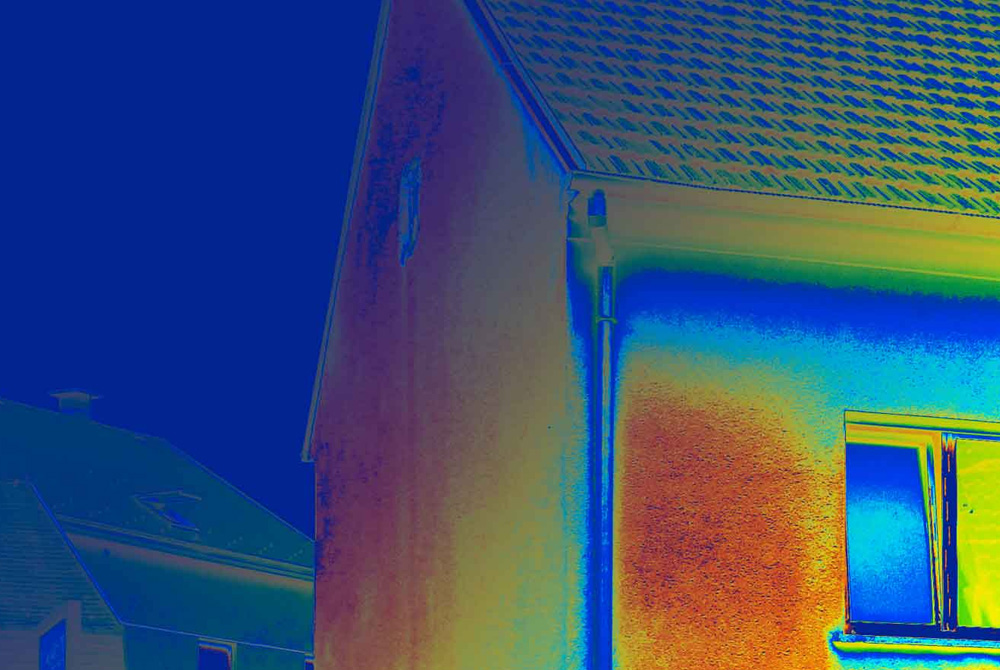
A U-value is the thermal transmittance of a building element. It shows the rate of heat loss through that element for each degree of temperature difference between inside and outside. BR 443 explains that the U-value multiplied by the element area gives the heat-loss rate through that component, which is why it matters so much in Building Regulations and energy calculations.
W/m²K means watts per square metre per kelvin. It is the standard unit used for U-values and tells you how much heat is lost through one square metre of the element for each one-degree temperature difference. In practical terms, it is the unit that lets Building Control, SAP and SBEM compare one wall, roof or window against another consistently.
Yes. A lower U-value means the element is losing less heat, so it is thermally better. That is why Part L limiting values are expressed as maximum U-values. The catch on real projects is that “better” is not just about one element in isolation; the whole design still has to work for compliance, buildability, moisture risk and cost.
Pretty much all the main elements in the thermal envelope can be calculated, including walls, roofs, floors, windows and doors. BR 443 is specifically concerned with the calculated U-values of new building elements such as walls, roofs, floors, windows and doors, while the relevant Approved Documents then apply those values to the Part L compliance route for dwellings and buildings other than dwellings.
No. Building Regulations are the main trigger, but the same U-values also feed related energy work such as SAP, SBEM, BRUKL and EPC modelling where those calculations need reliable element performance inputs. In practice, once the U-values are wrong, the knock-on effect can spread from the Part L file into the wider energy and handover package.
Often, yes. Approved Document L says U-values should be assessed using the methods and conventions in BR 443, so where the construction is bespoke, traded off, or not covered cleanly by a simple product certificate, Building Control will usually expect proper evidence. On straightforward jobs that may be simple; on unusual details it becomes a core part of the compliance package.
Yes. New dwellings and new dwellings created by conversion sit inside the current Part L Volume 1 framework, and the limiting or target performance of walls, roofs, floors, windows and doors all depend on U-values being assessed correctly. In practical terms, if you are creating a new house or flat, the project’s SAP and Part L route are built on those figures.
Often, yes. New fabric elements in existing dwellings, including those constructed as part of an extension, must meet the relevant limiting standards, and highly glazed or unusual extensions often need a calculation route rather than a simple rule-of-thumb specification. On extension projects, U-value calculations are especially useful where glazing, lantern roofs or awkward existing conditions make the default route too blunt.
Yes. New buildings other than dwellings sit under Approved Document L Volume 2, and the limiting performance of roofs, walls, floors, windows, doors and rooflights depends on correct U-values. Those figures then feed the SBEM/DSM model and the BRUKL report, so on commercial jobs the U-value work is part of the wider compliance model, not a stand-alone afterthought.
Yes, often they do. Approved Document L Volume 2 allows an approved calculation tool for certain extension scenarios and also applies energy-efficiency requirements to material change of use and other existing-building work. In practice, once the project involves new thermal elements, altered openings or retained fabric being upgraded, U-value calculations usually become part of the evidence trail.
They are related but opposite in direction. BR 443 summarises the core relationship from BS EN ISO 6946 as U = 1/Rtot. In simple terms, R-value is resistance to heat flow, while U-value is heat flow through the whole element. Higher resistance gives a lower U-value, which is why people sometimes talk about them together but they are not interchangeable.
Thermal conductivity, usually shown as lambda (λ), is a material property. A U-value is the performance of the whole building element once all layers, fixings, air gaps and geometry are taken into account. BR 443 says you should use the manufacturer’s declared thermal conductivity where possible, but the final U-value is calculated for the completed element, not for one material in isolation.
A U-value deals with heat loss through the plane element itself, while a Psi-value (Ψ) deals with extra heat loss at junctions such as wall-to-floor, wall-to-roof and around openings. BR 443 makes that split clearly: repeating thermal bridges can be included inside the U-value of the element, but non-repeating junction losses are handled separately using linear thermal transmittance.
For most UK projects the core references are BR 443, BS EN ISO 6946 for opaque elements, BS EN ISO 13370 for floors and other elements in contact with the ground, and BS EN ISO 10077 for windows and doors. Hot-box measurement is covered by BS EN ISO 12567. That is the standards framework most compliant UK U-value work now sits inside.
The standard route is BS EN ISO 6946, applied through the conventions in BR 443. That route covers building components and building elements made of thermally homogeneous layers and can include repeating bridges such as studs or rafters where the standard method allows. In practical terms, this is the normal desk-based method for most walls, roofs and many upper floors.
Ground floors are treated differently because BS EN ISO 6946 excludes heat transfer through the ground. For slab-on-ground floors, suspended floors and basements, the recognised route is BS EN ISO 13370. That is why ground-floor U-value calculations need perimeter and floor-area information, not just a layer-by-layer buildup.
Approved Document L allows window and door U-values to be assessed by calculation or by measurement. For dwellings, that includes actual-size calculations, certain standard sizes, or hot-box testing under BS EN ISO 12567. For the calculation route, BS EN ISO 10077 is the core standard. On site, the key point is that the value has to reflect the whole unit, not just the centre pane.
Yes. Current dwelling guidance allows the U-value of a window to be assessed using the actual size and configuration, or for a standard window 1.23m (±25%) wide × 1.48m (−25%) high, with either the actual configuration or certain standard configurations. That is why some product ranges are assessed on a standard-size basis while bespoke façades may need project-specific values.
Yes. Current dwelling guidance allows door U-values to be assessed using the actual size and configuration, or standard sizes of 1.23m × 2.18m for doors up to 3.6m² and 2.00m × 2.18m for larger doors. Where one U-value is used for a product range, the worst-performing configuration in that range should be used.
Yes, in some domestic cases. Current dwelling guidance says that for doors or windows, the default value from SAP Table 6e can be used as an alternative. In practice, though, project-specific certified values are often preferable because default values can be conservative and may not help when the design is tight on compliance.
Yes. Approved Document L says U-values should be assessed for the whole fabric element, and BR 443 explains that for windows and roof windows the U-value is that of the complete unit, including the glazing, frame and the junction effects between them. That is why centre-pane values alone are not enough for compliance.
No. A centre-pane U-value only describes the glazing unit, while the whole-window U-value also includes the frame and edge effects such as the spacer/junction performance. BR 443 makes that distinction clearly, and the Approved Documents check compliance against the performance of the whole window or door unit, not just the glass.
Because rooflights are assessed differently. Current dwelling guidance says rooflight U-values should be based on the outer developed surface area and that the value is usually an Ud-value, which can be higher than a simple roof-opening area assumption. It also says windows and roof windows are assessed in the vertical position, while rooflights are assessed in the horizontal position.
No, not in the same way. Approved Document L Volume 2 says that the standard domestic-type window configurations should not be used for commercial windows. In practical terms, non-domestic glazing often needs actual-size or properly certified project-specific performance data, especially on larger or more bespoke façades.
That does not automatically break compliance, but it has to be handled properly. Both dwelling and non-domestic guidance say that where thicker glass is needed for wind load, safety, security or acoustic performance, an equivalent unit with standard 6mm glazing should be shown to meet the required standard. In other words, you still need defensible evidence rather than just assuming the thicker unit will be fine.
At minimum, you normally need the build-up, thicknesses, materials, dimensions, and where relevant the orientation/plane of the element and the product data for any glazing or doors. For ground floors you also need perimeter and floor area. The more unusual the construction, the more important accurate layer-by-layer information becomes.
Sometimes, yes. For certified windows, doors and similar products, manufacturer-declared whole-unit values can often be used if they have been established by an accepted method. But for bespoke walls, roofs, floors or mixed build-ups, you usually still need a proper BR 443-based project calculation. On real jobs, the question is whether the manufacturer’s value actually matches the element you are building.
Usually from drawings and specifications. That is the normal route for design-stage compliance work. Site measurement becomes more important if the as-built construction changes from the design or if the geometry is not clear on the drawings. For in-situ measured U-values, the method is different again and sits under ISO 9869 rather than standard design-stage calculation practice.
For the current live England dwelling guidance, the limiting values in Table 4.1 are 0.16 for all roof types, 0.26 for walls, 0.18 for floors, 1.6 for windows, 2.2 for rooflights and 1.6 for doors. Those are only the limiting values, though. The notional new-dwelling specification used for target setting is tighter again, with 0.18 walls, 0.13 floors, 0.11 roofs and 1.2 windows/glazed doors.
For current England extension and new-element work in existing dwellings, Table 4.2 gives 0.15 for roofs, 0.18 for walls, 0.18 for floors, 1.4 for windows or minimum WER Band B, 2.2 for rooflights, and 1.4 for doors. The guidance also notes that the floor U-value of an extension may be calculated using the exposed perimeter and floor area of the whole enlarged dwelling.
In current Wales dwelling guidance, Table 4.1 gives worst acceptable fabric values of 0.13 for roofs, 0.18 for walls in dwelling houses, 0.21 for walls in flats, 0.15 for floors, 1.4 for windows or roof windows, 2.2 for rooflights, and 1.4 for doors. These values apply to both new dwellings and new elements in existing dwellings, with some special notes and transitional timber allowances.
For current live England non-domestic guidance, Table 4.1 gives 0.18 for flat roofs, 0.16 for pitched roofs, 0.26 for walls, 0.18 for floors, 1.6 for windows, roof windows and curtain walling, 2.2 for rooflights, 1.6 for pedestrian doors, 1.3 for vehicle access and similar large doors, and 3.0 for high-usage entrance doors and roof ventilators.
For current Wales non-domestic guidance, Table 4.1 gives, for new buildings, 0.2 for flat roofs, 0.2 for pitched roofs, 0.26 for walls, 0.22 for floors, 1.6 for windows, 1.8 for roof windows and curtain walling, 2.2 for rooflights, 1.8 for pedestrian doors, 1.3 for vehicle access doors and 3.0 for high-usage entrance doors. Existing-building values then vary depending on whether the building is essentially domestic in character or not.
Yes, often they still do, but with more flexibility. In England and Wales, work to listed, conservation-area and certain historic or traditional buildings does not have to comply fully where that would unacceptably alter character or appearance. The work should still comply to the extent that is reasonably practicable, and the Building Control body is expected to consider conservation advice where relevant.
Answer:
Both England and Wales recognise that this can happen. Current guidance allows a lesser provision in certain cases, for example where meeting the wall target would reduce internal floor area too much, where meeting the roof target would limit headroom, or where floor targets would create significant problems with adjoining floor levels. The key point is that this is a justified exception, not a free downgrade.
No. A U-value calculation gives the thermal performance of a particular element. An overglazed extension calculation is the wider Part L exercise used when the extension glazing exceeds the default opening limit, and it may use those U-values inside an area-weighted trade-off or a SAP benchmark-extension comparison. One is an input; the other is the bigger compliance exercise.
Yes, in the right route it can. That is exactly how the area-weighted trade-off approach works, and both England and Wales also allow wider benchmark-comparison methods for more glazed extensions. In practical terms, stronger walls, roofs and floors can sometimes rescue a heavily glazed design where the façade itself has already been fixed by the architecture.
No. They are closely related, but they are not the same thing. A U-value calculation deals with heat loss; condensation-risk analysis deals with moisture risk in or on the construction. BR 443 says condensation risk should be considered, and local authority guidance also notes that a build-up still has to satisfy other Building Regulations concerns such as condensation risk, not just hit the headline U-value.
Partly. Repeating thermal bridges such as studs or rafters are normally included in the U-value calculation for the element. But non-repeating junction losses are dealt with separately using Psi-values, because they are not fully captured by the plane-element U-value alone. This is why a wall U-value and a full heat-loss model are not the same thing.
No, not always. BR 443 notes that in-situ methods use long-period measurements and can give erroneous results in some cases, while the government’s English-housing research programme also measured real wall U-values in occupied stock precisely because site performance can differ from assumed values. In practical terms, calculations tell you the design intent; measurements tell you what the built element is doing in reality.
Usually a competent building physics, Part L, or energy-compliance specialist prepares them. The technical requirement is not about using a fashionable title; it is about using the right standards and conventions correctly. On live projects, that means someone who understands BR 443, the relevant Approved Document and the difference between a quick product claim and a defensible compliance calculation.
There is no single national named assessor class for U-value calculations in the same way there is for some EPC work, but third-party accreditation is often preferred in practice. Hertfordshire Building Control, for example, says its published extension solutions are supported by calculations with third-party accreditation under the BBA Competency Scheme for U-Values or an equivalent standard. So while not every job has the same formal route, competence evidence matters.
A useful U-value report should clearly show the element build-up, assumptions, standard used, and the resulting U-value for each element so Building Control or the design team can see exactly what has been modelled. For windows, doors and rooflights, it should also make clear whether the value is whole-unit, tested, calculated, or based on a recognised rating or standard-size method.
There is no single national turnaround because it depends on the complexity of the job. A simple wall or roof build-up is much quicker than a pack covering multiple bespoke details, ground floors, rooflights, glazing products and mixed domestic/non-domestic elements. In practice, the biggest time driver is usually not the maths itself but the quality and completeness of the input information.
Cost is mainly driven by scope and complexity. A single extension wall build-up is a very different job from a full set of calculations for a house, block, shell-and-core space or mixed-use project. Ground-contact floors, bespoke glazing, multiple revisions and historic-building constraints all add time because they add modelling decisions and checking.
Most queries come from avoidable issues: the wrong standard being used, the wrong plane being used for windows or rooflights, missing frame data, confusing centre-pane with whole-unit values, forgetting developed-area rooflight rules, or using domestic standard window configurations where they are not allowed. These are not fringe technicalities; they are the common reasons calculations stop being trusted.
Yes. A single change to glazing, insulation thickness, rooflight type, floor build-up or door set can change the final U-value enough to affect the Part L position, especially on tight or highly glazed schemes. This is why late substitutions that seem small to site teams can still trigger a recalculation and a Building Control query.
Start early, fix the build-up before procurement starts, and make sure the person doing the calculations has the full specification rather than half-complete sketches and marketing sheets. The strongest projects are the ones that lock the thermal assumptions in early, keep substitutions under control, and use the right standard for the right element the first time. That is what keeps Building Control, SAP/SBEM and handover moving.
Videos for U-Value Calculations
Explore our videos for quick, engaging insights on building compliance. From step-by-step guides to expert advice, our video library simplifies complex topics, making it easier for you to take action and stay informed. Perfect for when you need clarity in minutes!